
Best Micro Servos for a 40-Inch RC Plane
A 9 gram micro servo with metal gears suits most control surfaces on a 40-inch RC plane. The TowerPro SG92R costs $8.00 and gives 2.5 kg/cm of torque at 4.8V, which covers ailerons and elevator on a foam airframe. Pick the DSM-44 digital servo at $22.00 for crisper centering at 0.07 seconds per 60 degrees. Six servos follow.
Quick facts
| Fact | Value |
|---|---|
| Plane size | 40-inch wingspan sport plane |
| Servo weight class | 9 g micro servos |
| SG92R torque | 2.5 kg/cm at 4.8V |
| SG92R speed | 0.1 sec per 60 degrees at 4.8V |
| DSM-44 speed | 0.07 sec per 60 degrees |
| Lowest price servo here | $8.00 for the SG92R and MA-90 |
What torque does a 40-inch plane need?
A 40-inch foam plane needs about 2.5 kg/cm of torque on ailerons and elevator. The SG92R gives exactly 2.5 kg/cm at 4.8V, so it covers both surfaces on a light airframe.
A rudder servo can use less torque than an aileron servo. The SG50 gives 0.6 kg/cm and weighs 5g, so it suits a small rudder or a throttle linkage.
Measure torque at 4.8V, since most receiver packs run near that voltage. A servo rated only at 6V gives less torque on a 4.8V pack.
Which micro servo fits each control surface?
Fit the SG92R on ailerons and elevator for 2.5 kg/cm of torque at $8.00. Its plastic composite gears keep the price low on a light foam plane.
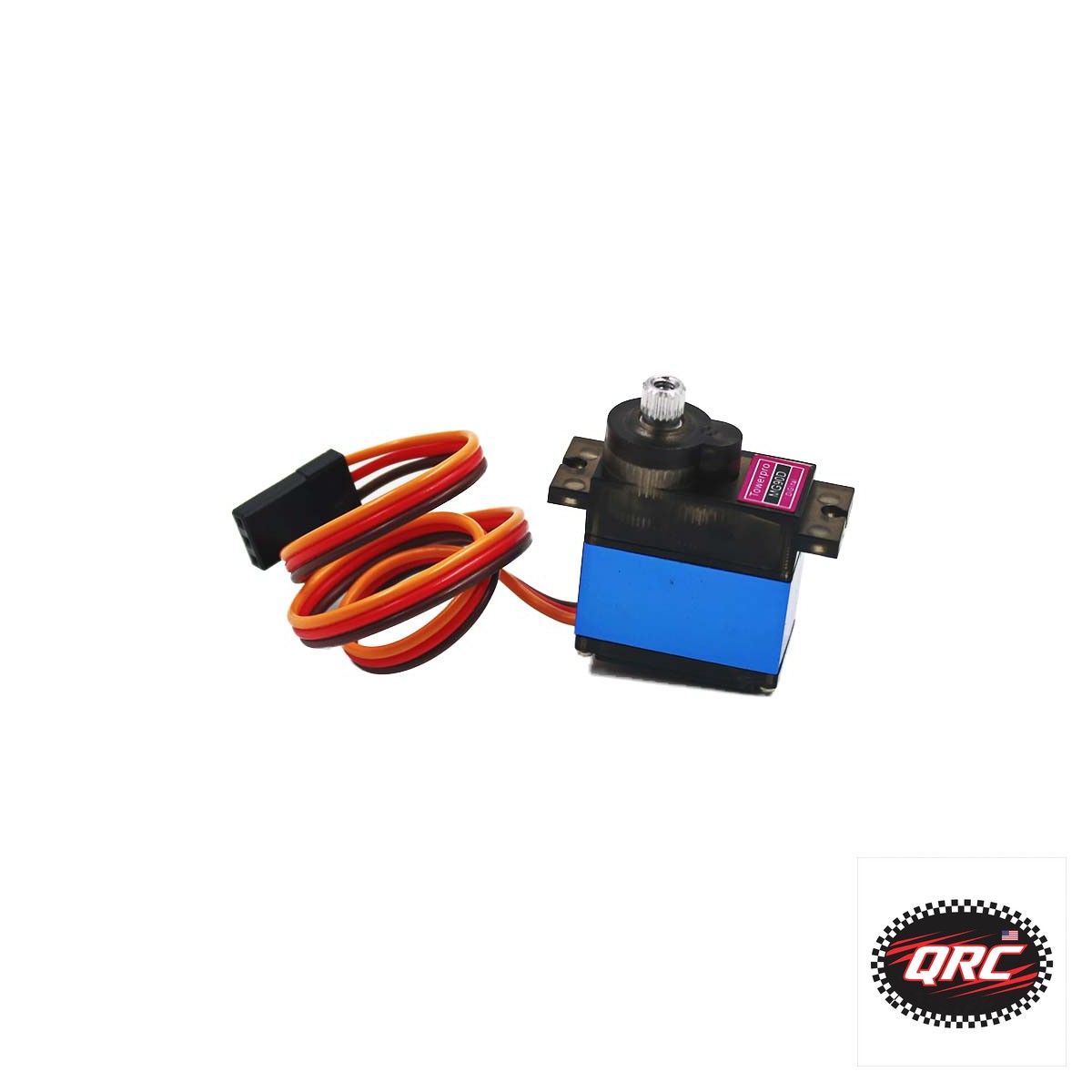
Fit the MG90D on any surface that takes landing shocks, since its metal gears resist stripping. It weighs 13g and uses a digital circuit for tighter centering.
Fit the DSM-44 on ailerons when you want the fastest response in this guide. It moves in 0.07 sec per 60 degrees and gives 1.6 kg/cm of torque.
Should you pick metal gears or plastic gears?
Metal gears handle shock loads and last longer on ailerons and elevator. The MA-90 uses metal gears, gives 1.3 kg/cm, and costs $8.00.
Plastic composite gears run quieter and cost less in light foam models. The SG92R uses plastic composite gears and still gives 2.5 kg/cm at 4.8V.
Pick metal gears when the servo drives a large surface or takes hard landings. Pick plastic gears for a light park flyer with small loads.
Analog or digital: which servo type holds center?
A digital servo updates faster and holds position with more force than an analog servo. The DSM-44 is digital, moves in 0.07 sec, and gives 1.6 kg/cm.
An analog servo updates its position about 50 times per second. That rate suits trainers and slow scale models with small control loads.
The MG90D is digital and weighs 13g, so it suits ailerons on a fast sport plane. The SG92R is analog and costs $8.00, so it suits a trainer.
How do you size a micro servo for the bay?
Measure the servo bay before you order any servo. The MA-90 measures 24 by 12.2 by 30 mm, while the SA-44 measures 20 by 26 by 8.0 mm.
Match the spline count to your servo arms before you buy. Most servos in this guide use a 25 tooth spline, so check the arm listing first.
Match the voltage too. Most micro servos run on 4.8V to 6V, so a 2 cell receiver pack needs a regulator or a high voltage servo.
How do you test a servo before you install it?
Center the servo with a tester before you fit the arm. A tester checks travel and centering on the bench before the servo goes in the plane.
Power the servo from a 4.8V to 6V source, never from a bare USB port. A servo can draw 1400mA at stall, per the MG996R datasheet.
Move the arm through its full travel and listen for binding. A servo that buzzes at the end point needs its travel reduced.
How the options compare
| Servo | Torque | Speed | Gears | Price |
|---|---|---|---|---|
| SG92R | 2.5 kg/cm at 4.8V | 0.1 sec per 60 deg at 4.8V | Plastic composite | $8.00 |
| MA-90 | 1.3 kg/cm | 0.10 sec per 60 deg at 4.8V | Metal | $8.00 |
| SG50 | 0.6 kg/cm | 0.1 sec | Not listed | $9.00 |
| SA-44 | 0.8 kg/cm | 0.12 sec | Metal | $10.00 |
| MG90D | Not listed | Not listed | Metal, digital | $14.00 |
| DSM-44 | 1.6 kg/cm | 0.07 sec | Metal, digital | $22.00 |
How do you install a micro servo in a 40-inch plane?
- Center the servo with a tester, then fit the arm at 90 degrees.
- Mount the servo with its screws and rubber grommets.
- Connect the servo lead to the correct receiver channel.
- Power the receiver and check full travel in both directions.
- Set the end points so the arm never binds at full throw.
Parts that fit this guide
In-stock parts ship from the New York, USA warehouse in 1-2 business days. Prices below are the live store prices we verified on November 10, 2026.
SG92R Analog Plastic Composite Gear Micro Servo ($8.00)
Micro servo at $8.00. It gives 2.5 kg/cm of torque at 4.8V with plastic composite gears.
MA-90 Metal Gear Micro Servo ($8.00)
Metal gear micro servo at $8.00. It gives 1.3 kg/cm of torque and moves in 0.10 sec per 60 degrees at 4.8V.
SG50 5g Micro Servo ($9.00)
Light 5g micro servo at $9.00. It gives 0.6 kg/cm of torque and moves in 0.1 sec.
SA-44 4.4g Metal Gear Sub-Micro Servo ($10.00)
Sub-micro metal gear servo at $10.00. It weighs 4.4g, gives 0.8 kg/cm, and moves in 0.12 sec.
MG90D Digital Metal Gear Micro Servo ($14.00)
Digital metal gear micro servo at $14.00. It weighs 13g and suits surfaces that take landing shocks.
DSM-44 Digital Metal Gear Micro Servo ($22.00)
Digital metal gear micro servo at $22.00. It gives 1.6 kg/cm and moves in 0.07 sec.
Shop the full range: Servos at Quality RC Parts. See also: Related guide.
Frequently asked questions
What size servo does a 40-inch RC plane need?
A 9 gram micro servo with at least 1.3 kg/cm of torque. The MA-90 meets that figure and costs $8.00.
Can a 5 gram servo fly a 40-inch plane?
Yes, on a small rudder or throttle linkage. The SG50 weighs 5g and gives 0.6 kg/cm, but ailerons need more torque.
Do metal gear servos last longer than plastic gear servos?
Yes, under shock loads such as hard landings. Plastic gears suit light foam planes with small loads.
What voltage do most micro servos use?
Most run on 4.8V to 6V from a receiver pack or BEC. Check the datasheet before you use a 2 cell lithium pack.
Sources
Last updated: November 10, 2026.