
Description
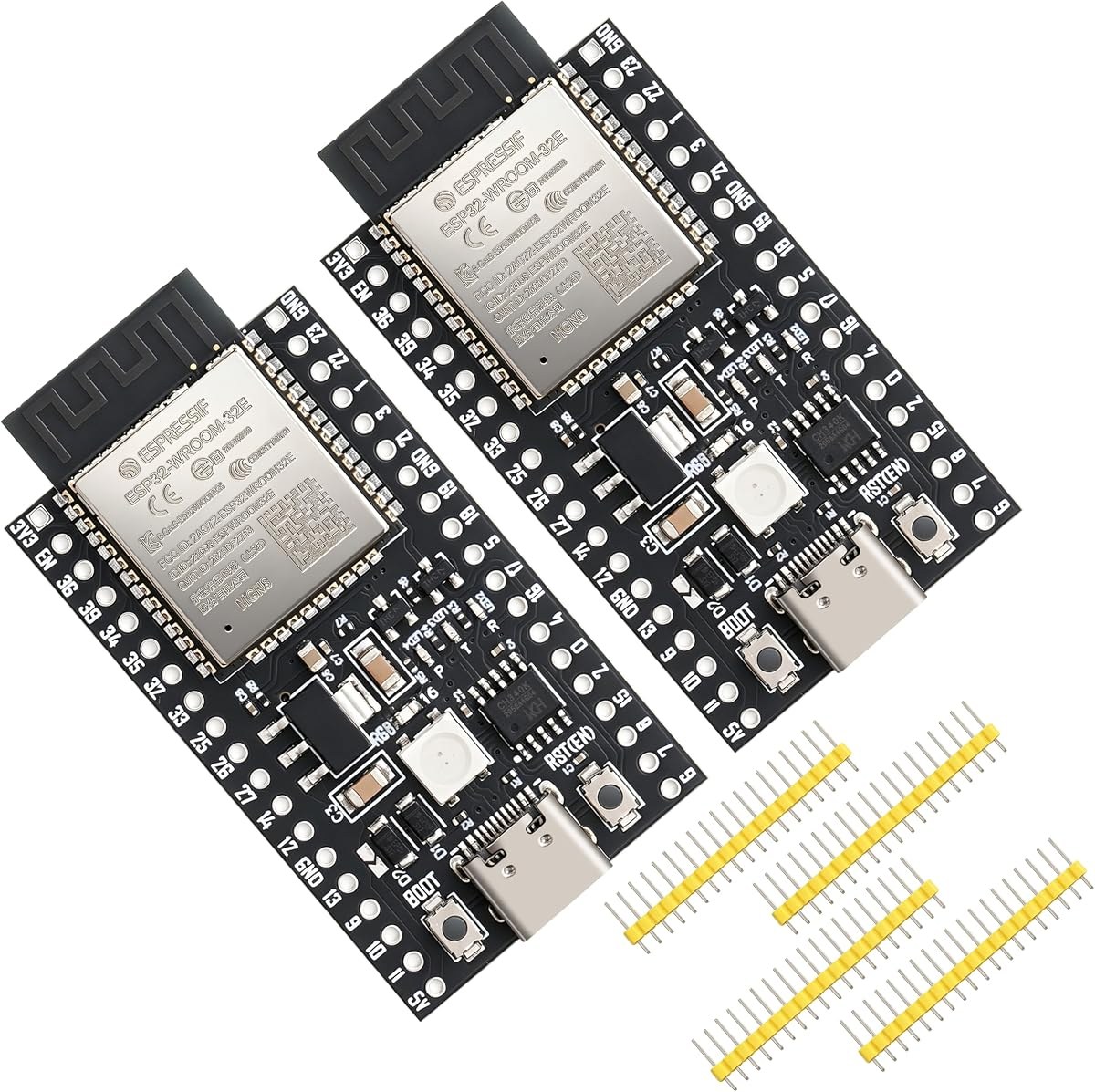
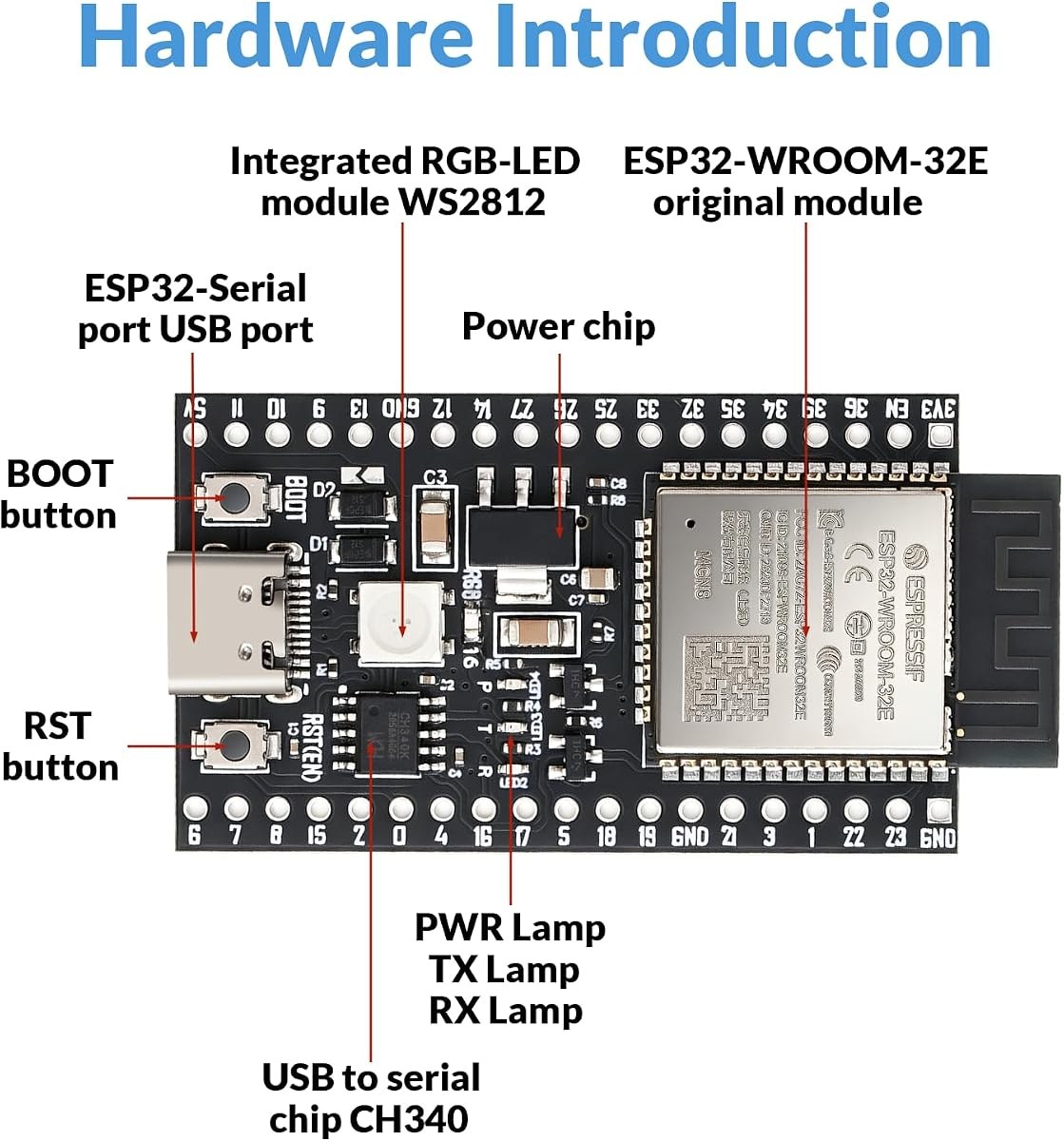
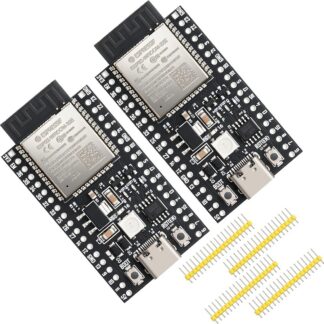
Two ESP32-DevKitC-32E development boards built around the Espressif-certified ESP32-WROOM-32E module, with upgraded 8 MB flash for IoT data and OTA updates. The 240 MHz dual-core processor runs WiFi/BLE and sensors together, with 38 GPIO pins (10 RTC) supporting SPI, I2C, and UART for LCDs, motors, and industrial sensors.
The USB-C interface works with Arduino IDE, MicroPython, and Espressif IDF on Windows, Mac, and Linux. Rated for industrial-grade stability from -40 C to 85 C for outdoor and automated systems.
Specifications
- Quantity: 2 ESP32-DevKitC-32E development boards
- Module: ESP32-WROOM-32E, Espressif-certified, 8 MB flash
- Processor: 240 MHz dual-core, 38 GPIO pins (10 RTC)
- Wireless: WiFi + Bluetooth 5.0 / BLE
- USB-C interface; Arduino IDE, MicroPython, Espressif IDF
- Operating range: -40 C to 85 C
In the box
Two ESP32-DevKitC-32E development boards and a user manual.
How to use it
Plug a board into a breadboard, connect USB-C, and run a blink sketch in the Arduino IDE, MicroPython, or ESP-IDF. The 8 MB flash leaves room for larger firmware and over-the-air updates. The wide temperature rating suits outdoor and automated systems.
Pairs with
A screw terminal breakout and breadboards give the boards somewhere to work. See ESP32 screw terminal breakout board 3-pack and ELEGOO 830-point breadboard 3-pack.
Compare
The HiLetgo 3-pack is the standard 38-pin board without the 8 MB flash upgrade. Alternative: HiLetgo ESP32 38-pin 3-pack.
Full comparison: ESP32 38-pin boards compared.
Shipped fast and securely from our secure facility in New York, providing fast, high quality USA shipping.
30-Pin vs 38-Pin: Which DevKit Board Do You Need?
This board is the 38-pin ESP32-DevKitC-32E: 38 pins, USB-C, 8MB flash, and WiFi + Bluetooth 5, in a 2-pack. If you want the narrower, breadboard-friendly layout, see the 30-pin ESP32 DevKit V1 Development Board: 30 pins with the ESP32-WROOM-32 module. The 30-pin board fits standard breadboards; the 38-pin board is wider and suits projects that need the extra GPIO and flash.


Reviews
There are no reviews yet.