
Posted on

Beginner vs Expert RC Transmitters: Which One to Buy

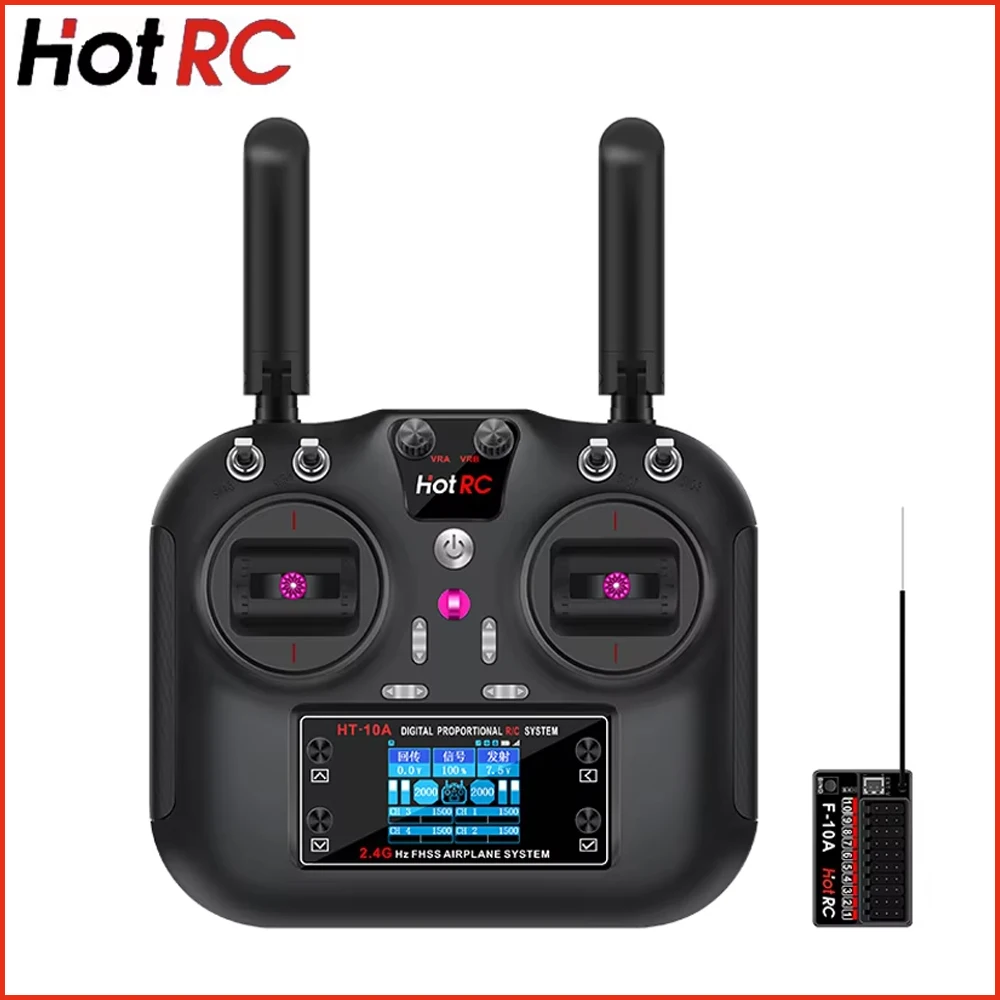
HotRC HT-10A 10-channel remote controller

Beginner vs Expert RC Transmitters: Which One to Buy

A beginner RC transmitter gives 6 channels, a receiver in the box, and a low price, which covers steering, throttle, and a few extras. An expert radio gives 10 channels for lights, winches, and extra servos. Buy 6 channels to start, and move to 10 when extras outgrow the radio.

HotRC HT-10A 10-channel remote controller
HotRC HT-10A radio with F-10A receiver, 10 channels for aircraft, cars, boats, and drones.

Quick facts

Fact Value
Beginner channels 6
Expert channels 10
Beginner price $18.53
Expert price $76.32
Receivers Included with each radio

What makes a radio a beginner radio?

A beginner radio gives 6 channels, a receiver in the box, and a low price. It covers steering, throttle, and a few extras.

The DS-600 costs $18.53 with an F-06A receiver. It gives 6 channels for boats, crawlers, and bashers.

The YSIDO 3CH costs $39.93 with an RX-G3 receiver. It gives 3 channels for simple 1/8 and 1/10 cars and boats.

What makes a radio an expert radio?

An expert radio gives 10 channels for lights, winches, and extra servos. It also covers aircraft, cars, boats, and drones.

The HT-10A costs $76.32 with an F-10A receiver. It gives 10 channels and offers Mode 1 or Mode 2.

Expert radios cost more because they drive more functions at once. You pay for channels you may not use yet.

Where does the FS-i6X sit?

The FS-i6X sits between beginner and expert. It gives 6 to 10 channels, with 6 by default, for $32.99.

It lists 5 receiver options: X6B, iA6B, A8S, iA10B, or iA6. It also offers Mode 1 or Mode 2.

Buy the FS-i6X when 6 channels feel tight but 10 channels feel too dear. It grows from 6 to 10 as builds grow.

When should you upgrade to 10 channels?

Count your functions first. Steering, throttle, lights, winch, and 2 servos need 6 channels, so a 7th function forces an upgrade.

Upgrade when you add a function the radio cannot drive. Do not upgrade for channels you will not use.

Keep the old radio as a spare or for a second model. A 6-channel radio still drives a simple car or boat.

What did we check on the bench?

We checked the channel counts on the listings. They are 3 for the YSIDO, 6 for the DS-600, 6 to 10 for the FS-i6X, and 10 for the HT-10A.

We counted the price spread from $18.53 to $76.32 across the 4 radios in this guide.

We verified the receivers that ship with each radio: RX-G3, F-06A, and F-10A, plus 5 options on the FS-i6X.

How the options compare

Radio Level Channels Receiver Price
DS-600 Beginner 6 F-06A $18.53
YSIDO 3CH Beginner 3 RX-G3 $39.93
FS-i6X Intermediate 6 to 10 5 options $32.99
HT-10A Expert 10 F-10A $76.32

Parts that fit this guide

In-stock parts ship from the New York, USA warehouse in 1-2 business days. Prices below are the live store prices we verified on November 10, 2026.

DS-600 6CH 2.4GHz Radio System with F-06A Receiver ($18.53)

DS-600 radio at $18.53 with an F-06A receiver. It gives 6 channels for boats, crawlers, and bashers.

3CH 2.4GHz Radio Transmitter with Receiver, GT3B-Compatible ($39.93)

YSIDO 3-channel radio at $39.93 with an RX-G3 receiver. It is a GT3B-compatible pistol grip for 1/8 and 1/10 RC cars and boats.

FS-i6X 10CH 2.4GHz AFHDS 2A RC Transmitter with Receiver Options ($32.99)

FS-i6X radio at $32.99 with 6 to 10 channels on 2.4GHz AFHDS 2A. It lists 5 receiver options and Mode 1 or Mode 2.

Hotrc Hot RC HT-10A HT10A 2.4Ghz 10CH Remote Controller F-10A F10A Receiver For RC Aircraft Vehicle Boat Drone Accessories Parts ($76.32)

HT-10A radio at $76.32 with an F-10A receiver. It gives 10 channels for aircraft, vehicles, boats, and drones.

Shop the full range: Radio Transmitters at Quality RC Parts. See also: Related guide.

Frequently asked questions

How many channels do I need to start?

Start with 6 channels, which cover steering, throttle, and a few extras on a car, boat, or first FPV drone.

Is the FS-i6X a beginner or expert radio?

It sits between the two. It gives 6 channels by default and grows to 10, so it suits a driver who outgrows 6 channels.

Why does the YSIDO cost more than the DS-600 with fewer channels?

The YSIDO is a GT3B-compatible pistol grip with an RX-G3 receiver for 1/8 and 1/10 cars, while the DS-600 is a 6-channel set at $18.53.

Can one radio drive a car and a drone?

No. Cars use pistol-grip radios and drones use stick radios, so one radio rarely suits both well.

Sources

Last updated: November 10, 2026.
Posted on

How to Choose a Beginner RC Car Transmitter

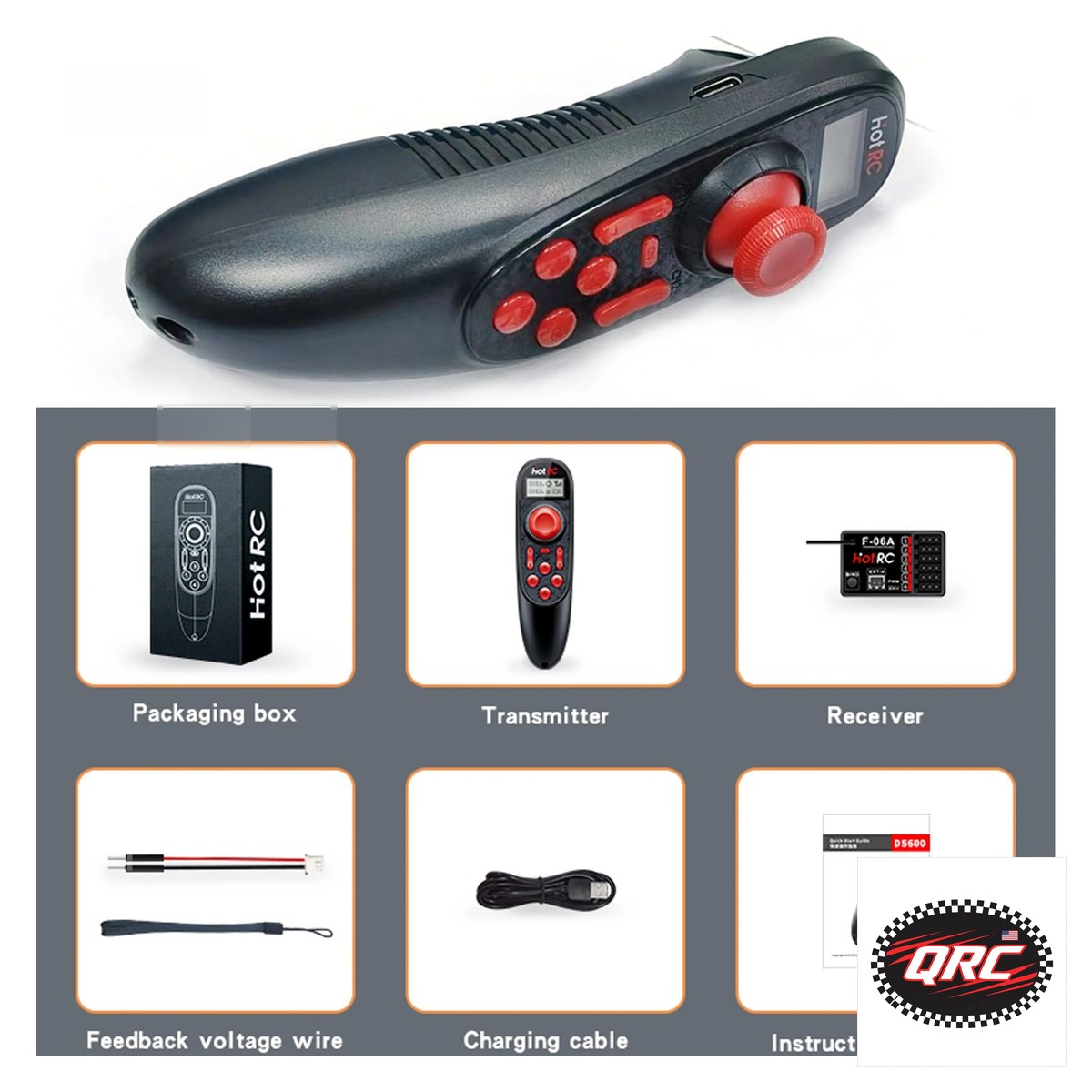
HotRC DS-600 6-channel radio system

How to Choose a Beginner RC Car Transmitter

A beginner RC car transmitter needs 2 channels for steering and throttle. It also needs a receiver in the box and range for a parking lot or track. Extra channels run lights, a winch, or a second servo later. This guide compares 4 radios and switch covers, from $4.74.

HotRC DS-600 6-channel radio system
HotRC DS-600 radio with F-06A receiver, 6 channels for cars and crawlers.

Quick facts

Fact Value
Channels 3, 6, or 10
Receivers F-06A, F-10A, RX-G3, or 5 options
Lowest radio $18.53
Switch covers $4.74, 5-pack
Lowest price here $4.74

How many channels does a beginner RC car need?

A car needs 2 channels for steering and throttle. A 3rd channel runs lights or a winch on a crawler.

The YSIDO 3CH gives 3 channels with an RX-G3 receiver for 1/8 and 1/10 cars and boats. It suits a simple car.

A 6-channel radio covers lights, a winch, and a second servo. The DS-600 gives 6 channels with an F-06A receiver.

Pistol grip or stick radio?

Cars use pistol-grip radios, because one hand steers with the wheel and one finger drives the throttle trigger.

The YSIDO is a GT3B-compatible pistol grip, per its listing. It suits 1/8 and 1/10 RC cars and boats.

Stick radios like the FS-i6X suit planes and drones. They work on a car, but the grip shape fights car driving.

Does the receiver come in the box?

The YSIDO ships with an RX-G3 receiver, the DS-600 ships with an F-06A, and the HT-10A ships with an F-10A.

The FS-i6X lists 5 receiver options: X6B, iA6B, A8S, iA10B, or iA6. Check which receiver ships with your order.

Buy the radio and receiver as a set. A receiver from another brand may not bind to your radio.

What do switch covers do?

Rubber switch covers grip the transmitter switches and stop slips. The set in this guide costs $4.74 for 5 caps.

They fit FrSky X9D and QX7, FlySky, and Spektrum radios, per the listing. They come in 5 colors.

Fit a cover on each switch you touch while driving. A slipped switch can change a setting by mistake.

What did we check on the bench?

We checked the channel counts on the listings. They are 3 for the YSIDO, 6 for the DS-600, 6 to 10 for the FS-i6X, and 10 for the HT-10A.

We verified the YSIDO is a pistol-grip radio with an RX-G3 receiver for 1/8 and 1/10 cars and boats from its listing.

We counted 5 receiver options on the FS-i6X listing and 2 receivers named on the other listings.

How the options compare

Radio Channels Receiver Price
YSIDO 3CH 3 RX-G3 $39.93
DS-600 6 F-06A $18.53
FS-i6X 6 to 10 5 options $32.99
HT-10A 10 F-10A $76.32
Switch covers Fits 3 brands 5-pack $4.74

Parts that fit this guide

In-stock parts ship from the New York, USA warehouse in 1-2 business days. Prices below are the live store prices we verified on November 10, 2026.

3CH 2.4GHz Radio Transmitter with Receiver, GT3B-Compatible ($39.93)

YSIDO 3-channel radio at $39.93 with an RX-G3 receiver. It is a GT3B-compatible pistol grip for 1/8 and 1/10 RC cars and boats.

DS-600 6CH 2.4GHz Radio System with F-06A Receiver ($18.53)

DS-600 radio at $18.53 with an F-06A receiver. It gives 6 channels for boats, crawlers, and bashers.

FS-i6X 10CH 2.4GHz AFHDS 2A RC Transmitter with Receiver Options ($32.99)

FS-i6X radio at $32.99 with 6 to 10 channels on 2.4GHz AFHDS 2A. It lists 5 receiver options and Mode 1 or Mode 2.

Hotrc Hot RC HT-10A HT10A 2.4Ghz 10CH Remote Controller F-10A F10A Receiver For RC Aircraft Vehicle Boat Drone Accessories Parts ($76.32)

HT-10A radio at $76.32 with an F-10A receiver. It gives 10 channels for aircraft, vehicles, boats, and drones.

5pcs/Lot Rubber Cap Sheath For FrSky X9D QX7 Flysky Spektrum Transmitter Switch Anti-Slipping Protect Cover ($4.74)

Rubber switch covers at $4.74 for a 5-pack. They fit FrSky X9D and QX7, FlySky, and Spektrum radios in 5 colors.

Shop the full range: Radio Transmitters at Quality RC Parts. See also: Related guide.

Frequently asked questions

How many channels do I need for a first RC car?

You need 2 channels for steering and throttle. A 3rd channel runs lights or a winch, so a 3-channel radio covers a simple car.

What is a pistol-grip radio?

A pistol-grip radio has a steering wheel and a throttle trigger, like a toy gun grip. It suits cars and boats, not drones.

Does the YSIDO work with a FlySky GT3B receiver?

The YSIDO is GT3B-compatible and ships with its own RX-G3 receiver, per the listing. It is not a genuine FlySky GT3B.

Which radio should I buy for a crawler?

Buy 6 channels or more for a crawler, because lights, a winch, and a second servo need extra channels beyond steering and throttle.

Sources

Last updated: November 10, 2026.
Posted on

How to Choose a Beginner Drone Controller

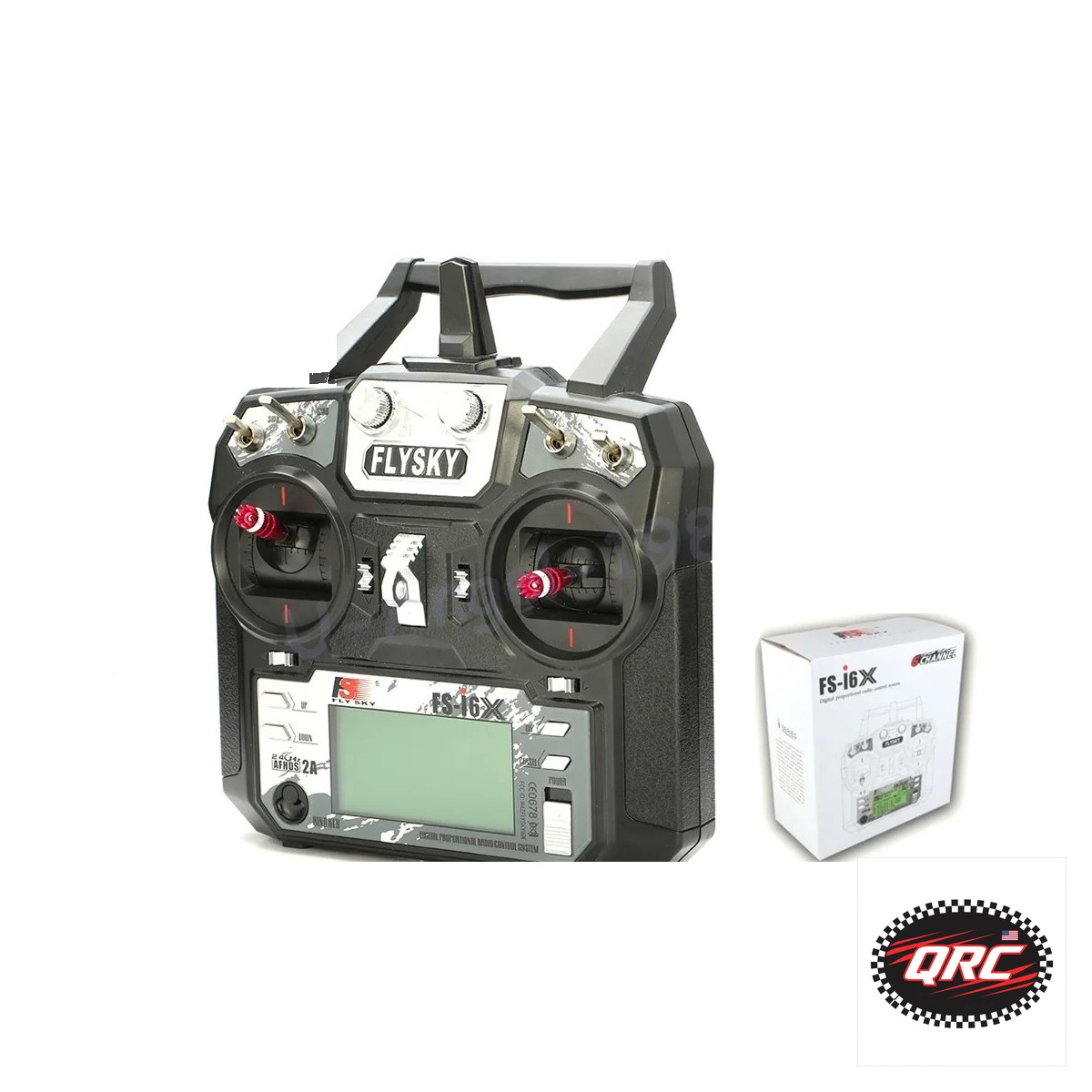
FlySky FS-i6X 10-channel transmitter

How to Choose a Beginner Drone Controller

A beginner drone controller needs enough channels for the drone, a receiver in the box, and a price that leaves room for spares. A 6-channel radio suits a first FPV drone, while the FS-i6X grows from 6 to 10 channels as builds grow. This guide compares 3 radios and switch covers, from $4.74.

FlySky FS-i6X 10-channel transmitter
FlySky FS-i6X transmitter, 6 to 10 channels on 2.4GHz AFHDS 2A.

Quick facts

Fact Value
Channels 6 or 10
Receivers Included, or 5 options on the FS-i6X
Lowest radio $18.53
Switch covers $4.74, 5-pack
Pistol-grip car radios Do not suit drones

How many channels does a beginner drone need?

A first FPV drone needs 4 channels for throttle, yaw, pitch, and roll, plus 1 or 2 for modes and arming.

A 6-channel radio covers those jobs with room for extras. The DS-600 gives 6 channels with an F-06A receiver.

The FS-i6X gives 6 to 10 channels, with 6 by default. It grows with the build instead of forcing a new radio.

Does the receiver come in the box?

The DS-600 ships with an F-06A receiver, and the HT-10A ships with an F-10A receiver. Both are complete radio sets.

The FS-i6X lists 5 receiver options: X6B, iA6B, A8S, iA10B, or iA6. Check which receiver ships with your order.

The FS-i6X also offers Mode 1 or Mode 2, per the listing. Pick the mode that matches your stick layout.

Stick radio or pistol grip?

Drones need a stick radio, because both sticks drive the flight controls. All 3 radios in this guide are stick radios.

Pistol-grip radios suit cars and boats. The YSIDO 3CH is a GT3B-compatible pistol grip for 1/8 and 1/10 RC cars and boats, not drones.

Do not buy a car radio for a drone. The grip shape fights the stick inputs a drone needs.

What do switch covers do?

Rubber switch covers grip the transmitter switches and stop slips. The set in this guide costs $4.74 for 5 caps.

They fit FrSky X9D and QX7, FlySky, and Spektrum radios, per the listing. They come in 5 colors.

Fit a cover on each switch you touch in flight. A slipped switch can change a flight mode by mistake.

What did we check on the bench?

We checked the channel counts on the listings: 6 for the DS-600, 6 to 10 for the FS-i6X, and 10 for the HT-10A.

We counted 5 receiver options on the FS-i6X listing: X6B, iA6B, A8S, iA10B, and iA6.

We verified the YSIDO 3CH is a pistol-grip radio for 1/8 and 1/10 RC cars and boats. Its listing states cars and boats, so we do not list it as a drone radio.

How the options compare

Radio Channels Receiver Price
DS-600 6 F-06A $18.53
FS-i6X 6 to 10 5 options $32.99
HT-10A 10 F-10A $76.32
Switch covers Fits 3 brands 5-pack $4.74

Parts that fit this guide

In-stock parts ship from the New York, USA warehouse in 1-2 business days. Prices below are the live store prices we verified on November 10, 2026.

DS-600 6CH 2.4GHz Radio System with F-06A Receiver ($18.53)

DS-600 radio at $18.53 with an F-06A receiver. It gives 6 channels for boats, crawlers, and bashers.

FS-i6X 10CH 2.4GHz AFHDS 2A RC Transmitter with Receiver Options ($32.99)

FS-i6X radio at $32.99 with 6 to 10 channels on 2.4GHz AFHDS 2A. It lists 5 receiver options and Mode 1 or Mode 2.

Hotrc Hot RC HT-10A HT10A 2.4Ghz 10CH Remote Controller F-10A F10A Receiver For RC Aircraft Vehicle Boat Drone Accessories Parts ($76.32)

HT-10A radio at $76.32 with an F-10A receiver. It gives 10 channels for aircraft, vehicles, boats, and drones.

5pcs/Lot Rubber Cap Sheath For FrSky X9D QX7 Flysky Spektrum Transmitter Switch Anti-Slipping Protect Cover ($4.74)

Rubber switch covers at $4.74 for a 5-pack. They fit FrSky X9D and QX7, FlySky, and Spektrum radios in 5 colors.

Related parts: 3CH 2.4GHz Radio Transmitter with Receiver, GT3B-Compatible: Not for drones: the YSIDO 3CH pistol-grip radio suits 1/8 and 1/10 RC cars and boats..

Shop the full range: Radio Transmitters at Quality RC Parts. See also: Related guide.

Frequently asked questions

How many channels do I need for a first FPV drone?

You need 4 channels for flight plus 1 or 2 for modes and arming. A 6-channel radio covers a first FPV drone with room left.

Does the FS-i6X come with a receiver?

The listing offers 5 receiver options: X6B, iA6B, A8S, iA10B, or iA6. Check which receiver ships with your order.

Can I use a pistol-grip car radio for a drone?

No. Pistol-grip radios suit cars and boats, while drones need a stick radio for both flight sticks.

What is Mode 1 or Mode 2?

Mode 1 and Mode 2 set which stick drives throttle. The FS-i6X listing offers both, so pick the mode you already fly.

Sources

Last updated: November 10, 2026.
Posted on

How to Hold a PCB Steady While You Solder

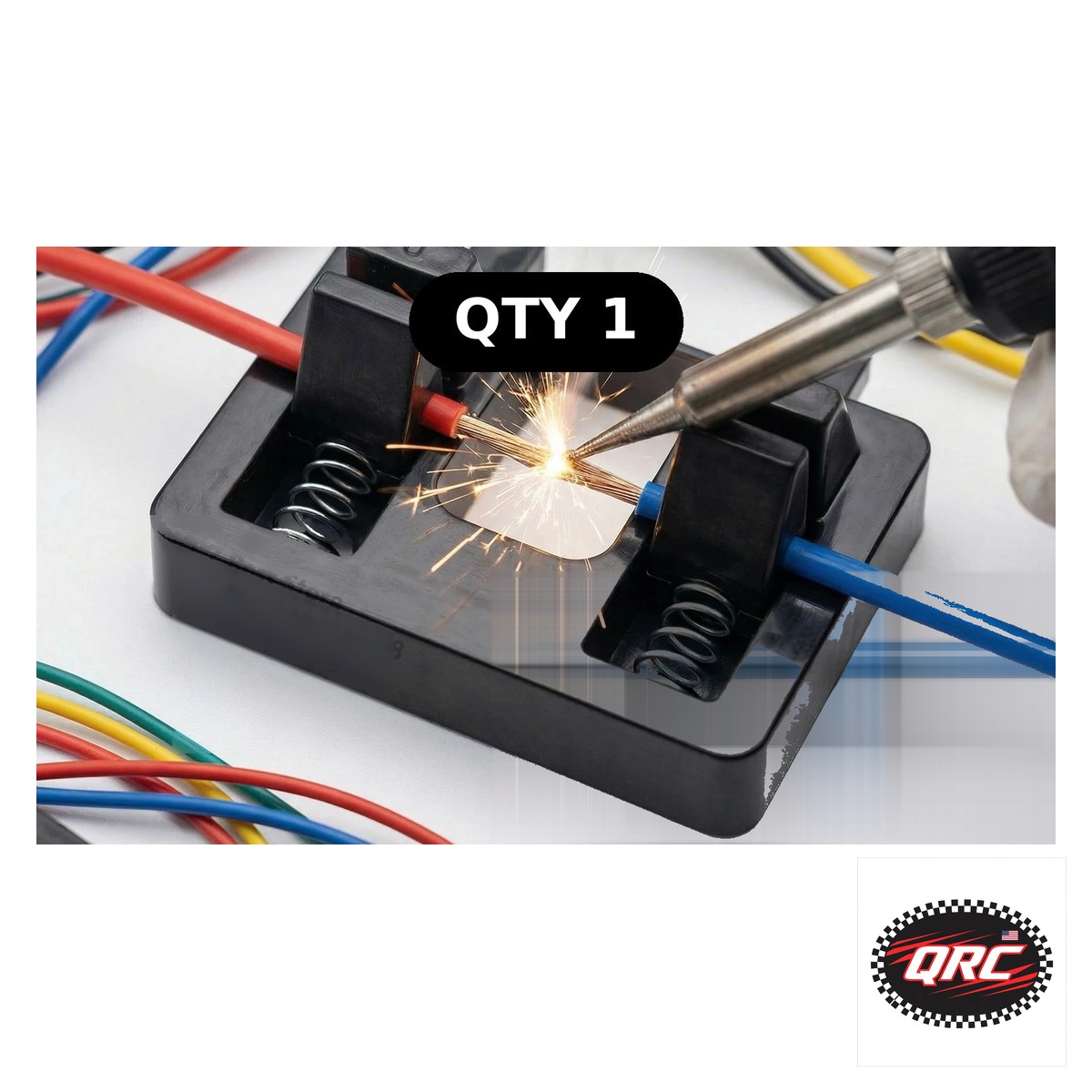
Adjustable PCB holder with suction base

How to Hold a PCB Steady While You Solder

A PCB holder or helping hands keeps the board still so both hands stay free for the iron and the solder. A suction base grips the bench, and 10 arms hold wire and parts at any angle. This guide covers holders, hands, solder, flux, and irons, from $3.99.

Adjustable PCB holder with suction base
Suction base PCB holder for soldering, with helping hands.

Quick facts

Fact Value
Holder heat limit 260C
Holder board size 50 by 70 mm
Helping hands 10 arms
Solder 63/37 rosin core, 0.8 mm, 100 g
Flux SRA 135, 2 oz
Lowest price here $3.99

Why hold the board still?

A board that moves makes cold joints. The solder cools before it wets the pad, and the joint fails later.

A holder keeps the board still so both hands stay free. One hand holds the iron and one hand feeds the solder.

Helping hands hold wire ends at the joint. You solder with both hands free and the wire stays put.

What does a suction PCB holder do?

The holder in this guide uses a suction base and a clamp. It holds boards up to 50 by 70 mm.

It resists heat to 260C, per the listing. Keep the iron tip on the joint, not on the holder.

Press the suction base down until it grips. Test the grip before you heat the iron.

What do helping hands do?

Helping hands use magnetic arms to hold wire and small parts. The set in this guide has 10 arms.

Set each arm to hold a wire end near the joint. The magnet base keeps the arms where you put them.

A station with a magnifier suits close work. The station in this guide costs $31.99 and adds a lens.

Which solder and flux go with the holder?

Maiyum solder wire costs $17.99 for 100 g of 63/37 rosin core at 0.8 mm. It feeds clean joints on small pads.

SRA flux costs $11.99 for a 2 oz jar of rosin paste. Flux cleans the joint so solder wets the pad.

Use rosin core solder and rosin flux together. Do not use acid flux on electronics, because it corrodes the joint.

Which iron pairs with the holder?

The Plusivo Wired kit costs $13.99 and adjusts from 200 to 450C. It suits small solder work on a held board.

The Plusivo Digital kit costs $38.99 with an LED display and a 200 to 500C range. It suits longer sessions with steady heat.

Pick the wired kit to start and the digital kit when you solder often. Both run on a 120V US plug.

What did we check on the bench?

We checked the holder listing states 260C heat resistance and a 50 by 70 mm board size.

We counted 10 arms on the helping hands listing and a magnifier on the station listing.

We matched the Plusivo Digital range of 200 to 500C and the Wired range of 200 to 450C to their listings.

How the options compare

Part Holds Price
PCB holder Boards to 50 by 70 mm $4.37
Helping hands Wire and small parts, 10 arms $3.99
Hands station Boards and wire, with magnifier $31.99
Solder wire 100 g, 0.8 mm $17.99
Flux 2 oz jar $11.99
Wired iron kit 200 to 450C $13.99

How do you set up a board for soldering?

  1. Clean the bench and set the holder on a flat spot.
  2. Press the suction base down until it grips.
  3. Clamp the board with the copper side up.
  4. Set helping hands arms to hold wire ends near the joint.
  5. Tin the iron tip, then heat the joint and feed solder.

Parts that fit this guide

In-stock parts ship from the New York, USA warehouse in 1-2 business days. Prices below are the live store prices we verified on November 10, 2026.

Adjustable PCB Holder with Suction Base ($4.37)

Adjustable PCB holder at $4.37 with a suction base and clamp. It holds boards steady and resists heat to 260C.

Magnetic Soldering Helping Hands, 10 Arms ($3.99)

Magnetic helping hands at $3.99 with 10 arms. They hold wire and small parts steady while you solder.

Soldering Helping Hands Station with Magnifier ($31.99)

Helping hands station at $31.99 with a magnifier. It holds boards and wire for close work.

Maiyum 63/37 Rosin Core Solder Wire, 0.8mm, 100g ($17.99)

Maiyum solder wire at $17.99. It is 63/37 rosin core, 0.8 mm, and 100 g.

SRA 135 Rosin Paste Flux, 2oz Jar ($11.99)

SRA flux at $11.99. It is rosin paste in a 2 oz jar for clean joints.

Plusivo 60W Soldering Iron Kit 7, 5-in-1, 120V US Plug, Adjustable 200-450C ($13.99)

Plusivo wired iron kit at $13.99. It adjusts from 200 to 450C for small solder work.

Shop the full range: Tools and Soldering at Quality RC Parts. See also: Related guide.

Frequently asked questions

Can I solder a board flat on the bench without a holder?

Yes, but the board moves and the joint cools early. A holder costs $4.37 and keeps the board still.

What size board fits the holder?

The holder takes boards up to 50 by 70 mm, per the listing. Larger boards need a bigger holder or a second clamp.

Do helping hands scratch the board?

No. The clips hold wire and parts, not the board face. Clamp the board in the holder and use hands for wire only.

Which iron temperature should I use?

Soldering guides cite about 350C for rosin core solder on small pads. Start there, then adjust by joint size.

Sources

Last updated: November 10, 2026.
Posted on

How to Replace DJI FPV Propellers With 5328S Blades

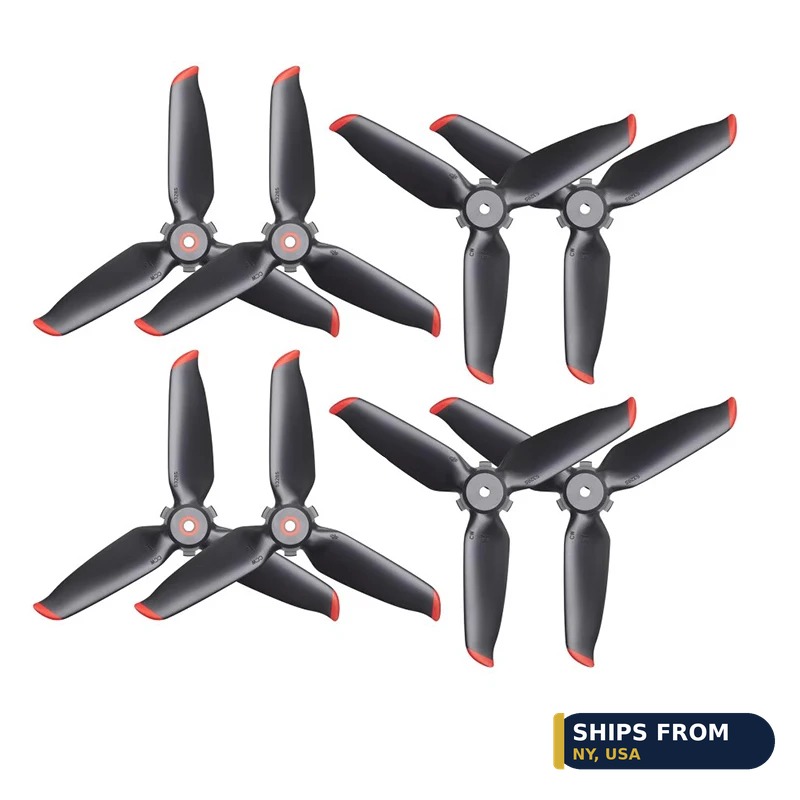
5328S propellers for DJI FPV

How to Replace DJI FPV Propellers With 5328S Blades

DJI FPV propellers come as 5328S blades in CW and CCW pairs, and a quad needs both types across its 4 motors. The 8-piece set in this guide lists CW and CCW blades for the DJI FPV Combo. Match the marked blade to the marked motor, then test hover before normal flight.

5328S propellers for DJI FPV
5328S propeller set for the DJI FPV Combo, CW and CCW blades.

Quick facts

Fact Value
Propeller 5328S
Set 8 pieces, CW and CCW
Fits DJI FPV Combo
Tool pins 2.9, 1.9, 1.9, 1.7, 0.9 mm
Lowest price here $13.50

Which propellers fit the DJI FPV?

DJI FPV propellers are 5328S blades. The 8-piece set in this guide lists CW and CCW props for the DJI FPV Combo.

Do not fit Mini or Avata props on a DJI FPV. Each DJI model uses its own prop size and mount.

A full set needs 2 CW and 2 CCW blades. Buy a full set, not a single blade, so both pairs match.

What is the difference between CW and CCW blades?

CW blades spin clockwise and CCW blades spin counter-clockwise. A quad needs both types across its 4 motors.

Match the marked blade to the marked motor. DJI states this marked-pair rule on its Mini 3 Pro support page, and the same care applies here.

A blade on the wrong motor spins the wrong way. The drone will not lift straight, so land at once if it tilts on takeoff.

Which spare props fit other DJI models?

Each DJI model uses its own spare prop. The table below lists the spare prop part for 8 DJI models with live prices.

Mini 4 Pro props are quick-release, while Mini 3 Pro and Mini 2 SE props screw on. Check the mount before you order.

Cross-check the model name on the listing, not the photo. Photos look alike across the Mini line.

Which tool pulls a press-fit prop?

The Mini Propeller Remover in this guide pulls press-fit props on BetaFPV Air65 and Air75 micro quads. It is not a DJI FPV tool.

Its pins measure 2.9, 1.9, 1.9, 1.7, and 0.9 mm, per the listing. Pick the pin that fits the prop hub.

DJI FPV props are quick-release, so they need no puller. Use the remover only on press-fit micro props.

What did we check on the bench?

We checked the 5328S listing states DJI FPV Combo fitment and CW and CCW blades. We counted 8 blades in the set.

We checked the remover listing states BetaFPV Air65 and Air75 fitment, so we do not list it as a DJI FPV tool.

We matched the marked-pair rule to the DJI Mini 3 Pro support page, not to a seller claim.

How the options compare

DJI model Spare prop part Price
Mini 4 Pro Replacement propellers $13.93
Mini 3 Pro 8-piece propellers $10.69
Mini 2 SE Replacement propellers $14.38
Air 3, Air 3S 5747F propellers $12.35
Avata 2 3032S propellers $9.27
Flip Flip propellers $11.14
Neo, Neo 2 Neo propellers $5.93
DJI FPV 5328S propellers $29.57

How do you replace a DJI FPV propeller?

  1. Power the drone off and remove the battery.
  2. Note the CW or CCW mark on the old blade before you remove it.
  3. Pull the old blade off the motor hub.
  4. Press the new blade on the matching motor, marked to marked.
  5. Spin the prop by hand, refit the battery, and run a short hover test.

Parts that fit this guide

In-stock parts ship from the New York, USA warehouse in 1-2 business days. Prices below are the live store prices we verified on November 10, 2026.

8pcs Propellers 5328S Blades CW/CCW Props for DJI FPV Combo Drone Accessories ($29.57)

8 propellers at $29.57 for the DJI FPV Combo. 5328S blades in CW and CCW pairs for a full spare set.

Mini Propeller Remover Tool ($13.50)

Mini propeller remover at $13.50. It pulls press-fit props on BetaFPV Air65 and Air75 micro quads, not DJI quick-release props.

Related parts: Propeller for DJI Mini 4 Pro Replacement Low-Noise and Quick-Release Blades Props Wings For DJI Mini 4 Pro: Spare props for the Mini 4 Pro.; 8X Precise&Flexible Propellers for DJI Mini 3/3 Pro Props Blade Replacement Light Weight Wing Fans Spare: Spare props for the Mini 3 Pro.; Propellers for DJI Mini 2/Mini SE/Mini 2 SE/Mini 4K Drone Replacement Low-Noise and Quick-Release Blades: Spare props for the Mini 2 SE.; 4Pcs/8Pcs Propellers 5747F Low Noise Blade Quick-release CW/CCW Propeller for DJI Air 3/Air 3S Drone: Spare props for the Air 3 and Air 3S.; 4pcs Avata 2 Propellers 3032S Blade Propeller Replacement Spare Parts For DJI Avata 2 Drone Accessories: Spare props for the Avata 2.; Propeller for DJI FLIP Wing Replacement Props Blade Fans With Screwdrivers Spare Parts Quick Release: Spare props for the Flip.; 1/2 Pairs Propeller for DJI NEO NEO 2 Wing Replacement Props Blade Fans With Screwdrivers Spare Parts Quick: Spare props for the Neo and Neo 2..

Shop the full range: DJI Accessories at Quality RC Parts. See also: Related guide.

Frequently asked questions

Do Mini 4 Pro props fit the DJI FPV?

No. The DJI FPV uses 5328S blades. Each DJI model uses its own prop size and mount, so buy props that list the DJI FPV Combo.

How do I tell CW from CCW blades?

Match the mark on the blade to the mark on the motor. A blade on the wrong motor spins the wrong way and the drone tilts on takeoff.

Do I need the prop remover for DJI FPV props?

No. DJI FPV props are quick-release and need no puller. The remover suits press-fit props on BetaFPV Air65 and Air75 micro quads.

How many blades are in the 5328S set?

The set holds 8 blades in CW and CCW pairs, which covers all 4 motors with spares.

Sources

Last updated: November 10, 2026.
Posted on

How to Check Your Remote ID Is Broadcasting

Holybro Remote ID module for preflight broadcast check

How to Check Your Remote ID Is Broadcasting

Check your Remote ID broadcast before flight with a receiver app on your phone or with your ground station. Power the drone, wait for a GPS lock, and look for the broadcast signal with your drone ID. A broadcast that shows your ID, position, and altitude means the module works.

Quick facts

Fact Value
Check tool Receiver app or ground station Remote ID status
GPS lock Needed before the broadcast carries position
Broadcast signal WiFi or Bluetooth, per the module
What to see Drone ID, position, altitude, velocity
Holybro module $49.99, status in Mission Planner or QGroundControl
Fix first No signal means no flight until it works

What does a Remote ID broadcast carry?

A broadcast carries the drone ID, position, altitude, velocity, and takeoff location. A Standard Remote ID drone also carries the pilot position.

A broadcast module carries the drone data and the takeoff point. It does not carry the pilot position.

The signal goes out over WiFi or Bluetooth. A phone app that reads Remote ID can pick it up nearby.

How do you check with a phone app?

Power the drone and wait for a GPS lock. A broadcast without a fix carries no position.

Open a Remote ID receiver app on your phone and stand near the drone. Look for your drone ID in the list.

Check that the position and altitude match the drone spot. A stale position means the GPS feed has failed.

How do you check in the ground station?

ArduPilot shows Remote ID status in Mission Planner and QGroundControl. PX4 shows it in QGroundControl too.

Arm the drone on the bench and watch the status. A green status means the module is broadcasting.

A red status or a warning means the module has no feed. Check the wiring and the port settings first.

What if the broadcast does not show?

Check the module power first. The Holybro module takes 5V from its CAN or TELEM port, so a dead port means no broadcast.

Check the GPS lock next. A module with no position data cannot broadcast a valid position.

Check the antenna clearance last. Carbon and metal block the signal, so move the module clear of the frame.

What belongs on the preflight list?

Add a Remote ID line to your preflight list. Check the broadcast on every flight, not just the first one.

Check the DroneZone record too. The serial on the record must match the module on the drone.

Log the check with the date and the result. A log helps you spot a module that fails more often over time.

How the options compare

Check method What you see Needs Suits
Phone receiver app Drone ID and position Phone near the drone Quick field check
Mission Planner Remote ID status ArduPilot link ArduPilot builds
QGroundControl Remote ID status PX4 or ArduPilot link PX4 builds

How do you check your Remote ID before flight?

  1. Power the drone and wait for a GPS lock.
  2. Open a receiver app or your ground station.
  3. Look for your drone ID in the broadcast list.
  4. Check that the position and altitude match the drone.
  5. Fix any missing signal before you take off.

Parts that fit this guide

In-stock parts ship from the New York, USA warehouse in 1-2 business days. Prices below are the live store prices we verified on November 10, 2026.

Holybro Remote ID Module With Case – WiFi / Bluetooth, CAN / Serial, PX4 / ArduPilot ($49.99)

Remote ID module at $49.99. It broadcasts over WiFi and Bluetooth and runs ArduRemoteID firmware.

MAVLink2 WiFi Telemetry Module for Pixhawk/APM ($42.99)

Telemetry module at $42.99. It gives a MAVLink2 WiFi link for Pixhawk and APM flight controllers.

Shop the full range: GPS, Telemetry and Sensors at Quality RC Parts. See also: Related guide.

Frequently asked questions

How far can a phone see a Remote ID broadcast?

It depends on the module and the site. The Holybro manual lists above 500m as an estimate, with a ground test of 180m.

Does Remote ID need cell service to work?

No. The broadcast goes out over WiFi or Bluetooth direct, with no cell link needed.

What if my ground station shows no Remote ID status?

Check the module wiring and the port settings. A module with no feed from the flight controller cannot broadcast.

Do I need to check Remote ID on every flight?

Yes. A module can fail between flights, so check the broadcast each time you fly.

Sources

Last updated: November 10, 2026.

Posted on

How to Add Remote ID to an Older Drone Without Built-In

Holybro Remote ID module for preflight broadcast check

How to Add Remote ID to an Older Drone Without Built-In

Add Remote ID to an older drone by fitting an FAA-accepted broadcast module or by flying inside a FRIA. Older drones shipped before built-in Remote ID, so they need a retrofit module that appears on the FAA Declaration of Compliance list. Mount the module clear of carbon and metal, power it, and enter its serial number in DroneZone.

Quick facts

Fact Value
Older drone Shipped before built-in Remote ID
Retrofit path FAA-accepted broadcast module, DOC listed
No-module path Fly inside a FRIA
Broadcast module flight Visual line of sight only
Holybro module note No DOC entry verified as an end-user module
Serial entry Enter the module serial in DroneZone

Why do older drones lack Remote ID?

Remote ID became a rule for registered drones after most older models shipped. Early drones had no radio or firmware for it.

Older drone types such as early Yuneec models shipped before built-in Remote ID. They need a retrofit module or a FRIA to fly legally.

Check the FAA DOC list for your exact model first. Some older models gained a DOC through a firmware update.

What is the retrofit module path?

A broadcast module attaches to the drone and broadcasts its ID and position. It needs power and a clear spot for its antenna.

Pick a module that appears on the FAA DOC list. Only a listed module meets the rule for a retrofit.

Mount the module with tape or a bracket and route its wires clear of props. A loose module will shift in flight.

What is the FRIA path?

A FRIA is an FAA-recognized area where drones without Remote ID may fly. It needs no module and no retrofit.

Find a FRIA near you on the FAA site. Most FRIAs sit at club fields run by model aircraft groups.

You must stay inside the FRIA for the whole flight. Leave the area and the flight breaks the rule.

Can the Holybro module retrofit an older drone?

No, not as a plug-and-play fix. The Holybro module needs a PX4 or ArduPilot flight controller to feed it position data.

It is a Standard Remote ID solution for manufacturers and integrators. No DOC entry for it as an end-user broadcast module could be verified.

Older drones with no PX4 or ArduPilot controller cannot host it. Pick a self-contained listed module for those drones.

How do you finish the retrofit?

Enter the module serial number in your DroneZone record. Answer the Remote ID question with yes.

Test the broadcast before flight with a receiver app or your ground station. A module that does not broadcast does not meet the rule.

Fly within visual line of sight at all times. A broadcast module flight has no beyond-line-of-sight option.

How the options compare

Retrofit path Cost shape Flight limit Needs
Listed broadcast module Module price plus mount Visual line of sight DOC-listed module
FRIA flight No module cost Inside the FRIA only FRIA site access
Holybro module $49.99 plus controller Per the build DOC PX4 or ArduPilot feed

How do you add Remote ID to an older drone?

  1. Check the FAA DOC list for your exact model.
  2. Pick a listed broadcast module or find a FRIA.
  3. Mount the module clear of carbon and metal.
  4. Power the module and test the broadcast.
  5. Enter the module serial in DroneZone.

Parts that fit this guide

In-stock parts ship from the New York, USA warehouse in 1-2 business days. Prices below are the live store prices we verified on November 10, 2026.

Holybro Remote ID Module With Case – WiFi / Bluetooth, CAN / Serial, PX4 / ArduPilot ($49.99)

Remote ID module at $49.99. It broadcasts over WiFi and Bluetooth and runs ArduRemoteID firmware.

MAVLink2 WiFi Telemetry Module for Pixhawk/APM ($42.99)

Telemetry module at $42.99. It gives a MAVLink2 WiFi link for Pixhawk and APM flight controllers.

Shop the full range: GPS, Telemetry and Sensors at Quality RC Parts. See also: Related guide.

Frequently asked questions

Can I fly my old drone without Remote ID?

Yes, inside a FRIA. Outside a FRIA, a registered drone needs Remote ID.

Will any broadcast module work?

No. Only a module on the FAA DOC list meets the rule. Check the list before you buy.

Does the Holybro module fit an older DJI drone?

No. It needs a PX4 or ArduPilot flight controller, which older DJI drones do not expose.

What is a FRIA?

It is an FAA-recognized identification area where drones without Remote ID may fly. Most sit at club fields.

Sources

Last updated: November 10, 2026.

Posted on

How to Choose a Broadcast Remote ID Module

Holybro Remote ID module for preflight broadcast check

How to Choose a Broadcast Remote ID Module

Choose a broadcast Remote ID module by its FAA Declaration of Compliance status first. Only a module on the accepted DOC list meets the rule for a retrofit. Check the weight, the power source, and the mount before you buy. The Holybro module costs $49.99 but has no verified DOC entry as an end-user broadcast module.

Quick facts

Fact Value
First check FAA DOC list entry for the exact module
Broadcast module flight Visual line of sight only, per the FAA
Standard Remote ID flight No VLOS limit from Remote ID
Holybro module $49.99, needs a flight controller feed
Holybro module weight 27.5g, per the manual
Built-in example DJI Mini 4 Pro ships with built-in Remote ID

What is a broadcast Remote ID module?

A broadcast module is a small radio that attaches to a drone and broadcasts its ID and position. It retrofits drones with no built-in Remote ID.

It broadcasts the drone serial number, position, altitude, velocity, and takeoff location. It does not broadcast the pilot position.

A drone flying with a broadcast module must stay within visual line of sight at all times, per the FAA rule.

What is built-in Standard Remote ID?

Standard Remote ID is built into the drone by its maker. It broadcasts the drone and control station positions from takeoff to shutdown.

The maker files a Declaration of Compliance for the whole drone. The FAA DOC list shows which drones ship with Standard Remote ID.

DJI Mini 4 Pro ships with built-in Standard Remote ID, per the FAA DOC list. Check the list for your exact model and serial range.

How do you check a module on the DOC list?

Open the FAA UAS Declaration of Compliance list and search by the maker name. Filter by Remote ID to see modules and drones.

Match the exact model name and FCC ID on the list. A close name is not a match, so read the entry before you buy.

Check the serial range in the entry too. Some DOCs cover only part of a production run.

What should you check besides the DOC status?

Check the weight and the power source. A module that needs a flight controller feed suits PX4 and ArduPilot builds only.

Check the mount and the antenna. The module must sit clear of carbon and metal to broadcast well.

Check the broadcast method. Most modules use WiFi or Bluetooth, and a receiver app must see the signal.

When does the Holybro module fit?

The Holybro module fits a PX4 or ArduPilot build where the flight controller feeds it position data. It costs $49.99 and weighs 27.5g.

It is a Standard Remote ID solution for manufacturers and integrators. It needs a DoC submission of its own in the USA.

It does not fit a plug-and-play retrofit need. No DOC entry for it as an end-user broadcast module could be verified, so pick a listed module for that job.

How the options compare

Option DOC path Flight limit Needs Example
Broadcast module Module DOC entry Visual line of sight Mount and power FAA-listed module
Built-in Standard RID Drone DOC entry No VLOS limit from RID Nothing to add DJI Mini 4 Pro
Holybro module Own DoC submission Per the build DOC PX4 or ArduPilot feed Holybro Remote ID
FRIA No module needed Inside the FRIA only FRIA site access Club field

How do you choose a broadcast Remote ID module?

  1. Check if your drone already has built-in Standard Remote ID.
  2. Search the FAA DOC list for an accepted broadcast module.
  3. Check the module weight and power source.
  4. Check the mount and antenna clearance on your drone.
  5. Enter the module serial in DroneZone after you buy it.

Parts that fit this guide

In-stock parts ship from the New York, USA warehouse in 1-2 business days. Prices below are the live store prices we verified on November 10, 2026.

Holybro Remote ID Module With Case – WiFi / Bluetooth, CAN / Serial, PX4 / ArduPilot ($49.99)

Remote ID module at $49.99. It broadcasts over WiFi and Bluetooth and runs ArduRemoteID firmware.

MAVLink2 WiFi Telemetry Module for Pixhawk/APM ($42.99)

Telemetry module at $42.99. It gives a MAVLink2 WiFi link for Pixhawk and APM flight controllers.

Matek F405-WING V2 Flight Controller with OSD and SD Slot for ArduPilot / INAV ($138.99)

Flight controller at $138.99. It runs ArduPilot with OSD and an SD slot for fixed-wing builds.

Shop the full range: GPS, Telemetry and Sensors at Quality RC Parts. See also: Related guide.

Frequently asked questions

Does a broadcast module need a GPS?

Most self-contained modules have one. The Holybro module has none and takes position data from the flight controller.

Can I fly beyond visual line of sight with a module?

No. A drone flying with a broadcast module must stay within visual line of sight at all times.

Is the Holybro module on the FAA DOC list?

No entry for it as an end-user broadcast module could be verified. It is a Standard Remote ID solution that needs its own DoC submission.

What is the difference between Standard and broadcast Remote ID?

Standard Remote ID is built in by the maker and broadcasts the pilot position too. A broadcast module adds only the drone position and takeoff point.

Sources

Last updated: November 10, 2026.

Posted on

How to Register a Drone and Remote ID in DroneZone

Holybro Remote ID module for preflight broadcast check

How to Register a Drone and Remote ID in DroneZone

Register a drone in FAA DroneZone, then add its Remote ID serial number to the same record. Recreational pilots register the pilot, while Part 107 pilots register each drone. Answer the Remote ID question with yes and enter the serial number from your Standard Remote ID drone or FAA-accepted broadcast module. Check the FAA Declaration of Compliance list first.

Quick facts

Fact Value
DroneZone site FAA DroneZone, faadronezone.faa.gov
Recreation registration Register the pilot, $5 for 3 years
Part 107 registration Register each drone, $5 per drone for 3 years
Remote ID serial From a Standard Remote ID drone or listed module
DOC check FAA UAS Declaration of Compliance list
Holybro module note No DOC entry verified as an end-user module

Do you register the pilot or the drone?

Recreational pilots register themselves, not each drone. One registration covers all recreational drones for 3 years.

Part 107 pilots register each drone by its serial number. Each registration lasts 3 years and costs $5 per drone.

Check the FAA DroneZone pages for the current fee and term. Fees and terms can change, so read the site before you pay.

Where do you enter the Remote ID serial number?

Log in to FAA DroneZone and open your drone inventory. Each drone record has a Remote ID section.

Answer the Remote ID question with yes, then pick the device type from the list. Enter the serial number from the drone or the module.

A broadcast module serial can move between drones. List the module on each drone record that uses it.

Which serial number counts for Remote ID?

Use the serial number from a Standard Remote ID drone or an FAA-accepted broadcast module. The serial must sit on an accepted DOC.

Check the FAA Declaration of Compliance list for your exact make and model. Search by the manufacturer name when the model name differs.

Do not enter a serial from a module with no DOC entry. The Holybro module has no verified DOC entry as an end-user broadcast module.

What if your drone has no Remote ID?

Register the drone and fly it only inside a FRIA. A FRIA is an FAA-recognized area where drones without Remote ID may fly.

Fit an FAA-accepted broadcast module when you want to fly outside a FRIA. The module serial goes on the drone record.

A sub-250g drone flown only for recreation needs no registration and no Remote ID. Check the FAA page for the exact thresholds.

How do you check the registration worked?

Open the drone record in DroneZone after you save it. The Remote ID answer should read yes with the serial shown.

Print or save the registration card. Carry it when you fly, since the FAA asks for proof of registration.

Test the broadcast before flight with a receiver app or your ground station. A record without a live broadcast does not meet the rule.

How the options compare

Pilot type What to register Fee Term Remote ID
Recreation The pilot $5 3 years Serial per drone
Part 107 Each drone $5 per drone 3 years Serial per drone

How do you register a drone and Remote ID in DroneZone?

  1. Log in to FAA DroneZone and pick the pilot dashboard.
  2. Register the pilot for recreation or each drone for Part 107.
  3. Check the FAA DOC list for your drone or module.
  4. Answer the Remote ID question with yes.
  5. Enter the serial number and save the record.

Parts that fit this guide

In-stock parts ship from the New York, USA warehouse in 1-2 business days. Prices below are the live store prices we verified on November 10, 2026.

Holybro Remote ID Module With Case – WiFi / Bluetooth, CAN / Serial, PX4 / ArduPilot ($49.99)

Remote ID module at $49.99. It broadcasts over WiFi and Bluetooth and runs ArduRemoteID firmware.

MAVLink2 WiFi Telemetry Module for Pixhawk/APM ($42.99)

Telemetry module at $42.99. It gives a MAVLink2 WiFi link for Pixhawk and APM flight controllers.

Shop the full range: GPS, Telemetry and Sensors at Quality RC Parts. See also: Related guide.

Frequently asked questions

How much does FAA registration cost?

It costs $5. Recreational pilots pay $5 for 3 years, and Part 107 pilots pay $5 per drone for 3 years.

Can I use one broadcast module on two drones?

Yes. List the module serial on each drone record that uses it, and fly only one drone at a time with it.

What if my module is not on the DOC list?

Do not enter its serial. Use a listed module or fly inside a FRIA instead.

Do I need to register a sub-250g drone?

No, for recreation only. Part 107 flight needs registration at any weight.

Sources

Last updated: November 10, 2026.

Posted on

How to Choose a Holybro Remote ID Module for PX4 Builds

Holybro Remote ID module for preflight broadcast check

How to Choose a Holybro Remote ID Module for PX4 Builds

Pick the Holybro Remote ID module when your flight controller runs PX4 or ArduPilot and has a free CAN or serial port. The module broadcasts over WiFi and Bluetooth and runs ArduRemoteID firmware. It is a Standard Remote ID solution for manufacturers and integrators. USA users must do their own FAA Declaration of Compliance submission. The module costs $49.99.

Quick facts

Fact Value
Radio module ESP-C3, WiFi and Bluetooth 2.4GHz, +20dBm
Module size 38 by 26.5 by 11.5mm, per the manual
Module weight 27.5g, per the manual
Ports JST GH 4-pin CAN and 6-pin TELEM serial
Power 5V from the TELEM or CAN port
Module price $49.99 with case

What does the Holybro Remote ID module do?

The module broadcasts your drone ID, position, altitude, and velocity in flight over WiFi and Bluetooth. It uses the Open Drone ID framework in ArduRemoteID firmware.

It takes position data from the flight controller over CAN or serial. It has no GPS of its own, so the flight controller must feed it a fix.

The radio is FCC and CE certified as a radio module. That certification covers the radio, not FAA Remote ID compliance.

Which flight controllers work with it?

The module works with PX4 and ArduPilot flight controllers. ArduPilot supports Remote ID from version 4.3, and PX4 from version 1.14.

Holybro lists the Pixhawk 6C as a compatible controller. Any PX4 or ArduPilot board with a free CAN or TELEM port can host it.

Check your firmware version before you order. An old ArduPilot build without Remote ID support will not feed the module.

How do you wire it to the flight controller?

Wire the 4-pin CAN port to a DroneCAN port, or wire the 6-pin TELEM port to a serial port. The module takes 5V from either port.

Set the flight controller port for Remote ID traffic. ArduPilot documents the CAN and serial setup in its Remote ID guide.

Keep the antenna clear of carbon and metal. A blocked antenna cuts the broadcast range, which the manual lists above 500m.

Is this module FAA approved for end users?

No, not as a plug-and-play broadcast module. Holybro states it is a Standard Remote ID solution for manufacturers and integrators.

Holybro states USA users must do their own FAA Declaration of Compliance submission. The QRC listing states the same warning.

No FAA Declaration of Compliance entry for this module as an end-user broadcast module could be verified. Check the FAA DOC list before you fly with it.

When should you pick a different module?

Pick an FAA-accepted broadcast module when you need a plug-and-play retrofit for an older drone. Check the FAA DOC list for accepted modules.

Pick the Holybro module when you build a Standard Remote ID aircraft as a manufacturer or integrator with a DoC plan.

Pick a FRIA flight area when your drone has no Remote ID and you fly for recreation. A FRIA needs no module at all.

How the options compare

Remote ID option Who it fits FAA path Needs
Holybro module PX4 and ArduPilot builders Own DoC submission CAN or serial port
FAA-accepted broadcast module Older drone owners DOC listed, enter serial Mount and power
Built-in Standard Remote ID New drone buyers DOC listed by maker Nothing to add
FRIA flight Recreation pilots Fly inside a FRIA FRIA site access

How do you fit the Holybro Remote ID module?

  1. Check your flight controller runs PX4 or ArduPilot with Remote ID support.
  2. Pick the CAN port or the TELEM serial port for the module.
  3. Wire the module and power it from 5V on that port.
  4. Set the flight controller port for Remote ID traffic.
  5. Check the FAA Declaration of Compliance list before you fly.

Parts that fit this guide

In-stock parts ship from the New York, USA warehouse in 1-2 business days. Prices below are the live store prices we verified on November 10, 2026.

Holybro Remote ID Module With Case – WiFi / Bluetooth, CAN / Serial, PX4 / ArduPilot ($49.99)

Remote ID module at $49.99. It broadcasts over WiFi and Bluetooth and runs ArduRemoteID firmware.

MAVLink2 WiFi Telemetry Module for Pixhawk/APM ($42.99)

Telemetry module at $42.99. It gives a MAVLink2 WiFi link for Pixhawk and APM flight controllers.

Matek F405-WING V2 Flight Controller with OSD and SD Slot for ArduPilot / INAV ($138.99)

Flight controller at $138.99. It runs ArduPilot with OSD and an SD slot for fixed-wing builds.

Shop the full range: GPS, Telemetry and Sensors at Quality RC Parts. See also: Related guide.

Frequently asked questions

Does the Holybro module have GPS?

No. It takes position data from the flight controller over CAN or serial, so the flight controller must feed it a fix.

Is the Holybro module FAA certified?

No, not as an end-user broadcast module. It is a Standard Remote ID solution, and USA users must do their own DoC submission.

What firmware does it run?

It runs ArduRemoteID firmware, which is open source. It supports firmware updates over its web interface.

How far does it broadcast?

The manual lists above 500m detection range as an estimate, with a ground test of 180m. Range depends on the antenna and the site.

Sources

Last updated: November 10, 2026.