
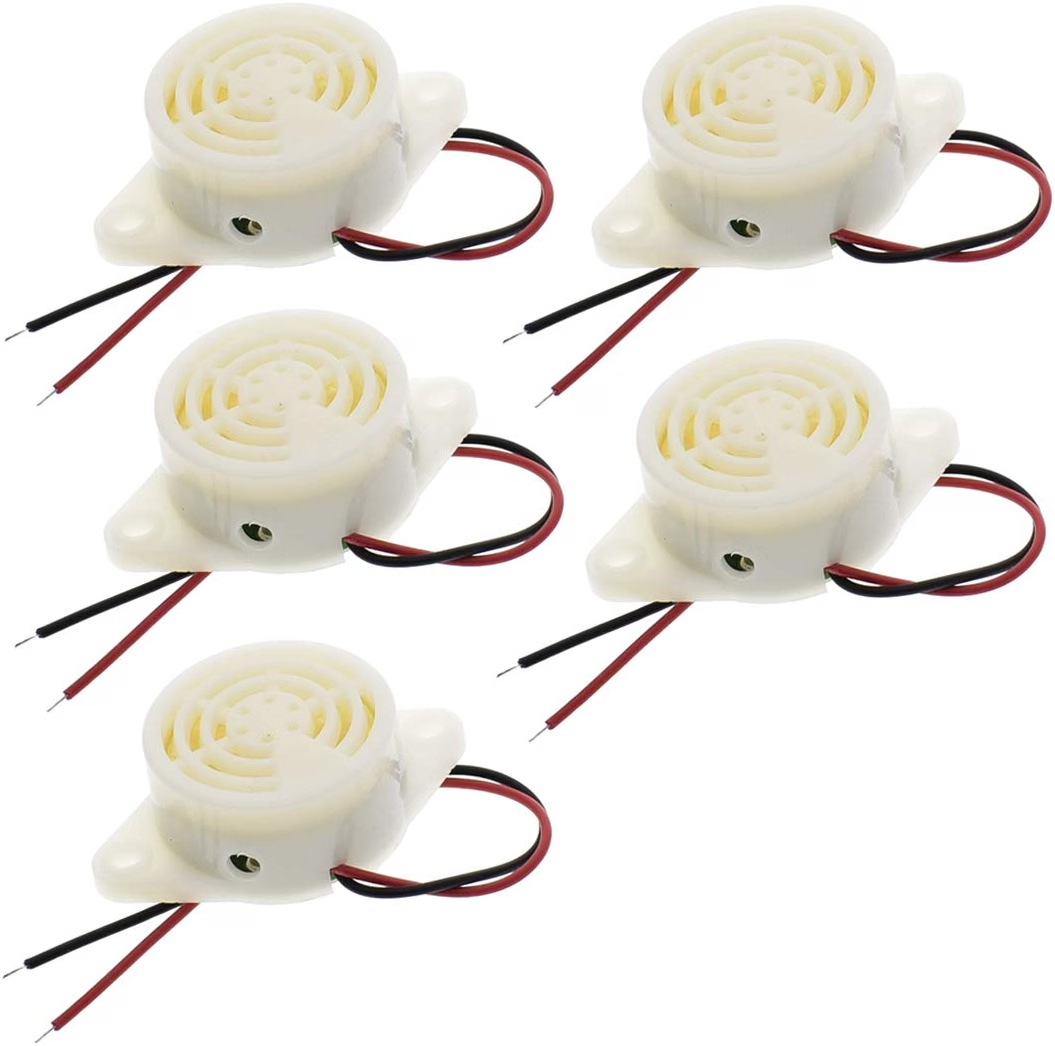
A drone alarm buzzer is the cheapest insurance you can put on a quad. When a drone goes down in tall grass or behind a tree line, the beeper is what gets it back. Without one, a $250 build can vanish in a field you searched for an hour. With one, you walk straight to the sound. A drone alarm buzzer also gives you status tones for arming, disarming, and low battery warnings through the flight controller. This guide covers what a drone alarm buzzer does, the two kinds worth buying, and how to wire one into your build so it works the first time you need it.
What a drone alarm buzzer does
A drone alarm buzzer has one job: make noise so you can find the quad. Most flight controllers drive the beeper in lost model mode, which kicks in after the quad has sat disarmed for a set time, usually 30 seconds to a few minutes. Flip the beeper switch on your transmitter and it sounds on demand, which is how you locate a quad that went down out of sight. The same buzzer handles status tones. It chirps when the quad arms, beeps a pattern when it disarms, and can warn you about a low battery. On a robot build, the buzzer works as a plain alarm: a warning sound, a start signal, or an alert when a sensor trips. The part is simple, the wiring is two wires, and it costs less than a set of props. That is why every build should have one.
The loud one: HiLetgo SFM-27 alarm buzzer
The HiLetgo SFM-27 alarm buzzer is the loud option. It puts out a 95dB continuous beep, runs on 3 to 24V, and comes with red and black wire leads and mounting ears with screw holes. At 95dB you can hear it across a field, which is the whole point when the quad is down in brush. The wide 3 to 24V range means it runs from a 5V rail, a 12V rail, or straight off a battery, so it fits drones, RC builds, robots, and bench alarm projects. The 5-pack costs $13.47, which works out to under $3 per buzzer, so you can put one on every build and keep a spare in the parts bin. Use it when loud matters more than light: larger quads, long range builds, robot cars, and any project where you need to hear the alarm from a distance.
The tiny one: 5V active buzzer for racing quads
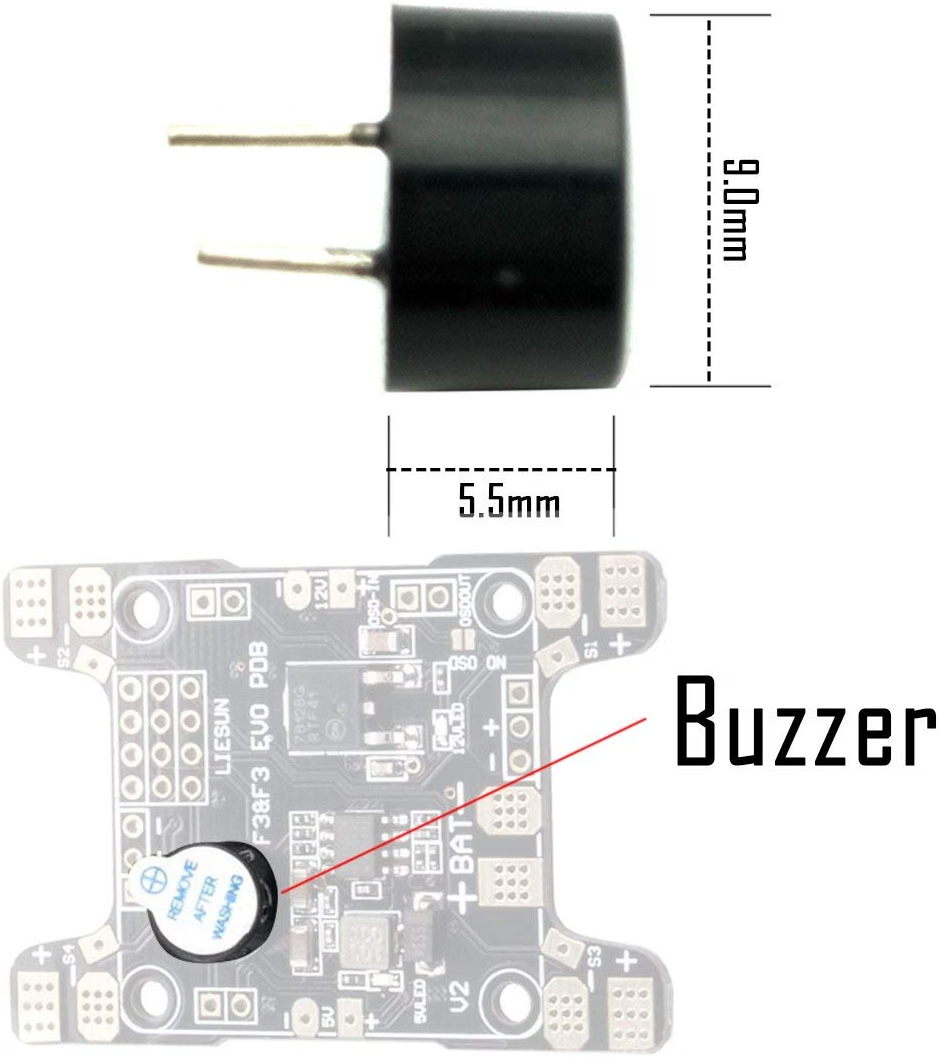
The 5V active buzzer is the light option. It measures 9 by 5.5mm and solders straight to your PDB or flight controller, where it gives you lost model beeps and status tones. A racing quad has no room or weight budget for a big alarm, and this buzzer fits in the space between the stack and the top plate. It runs on 5V, which is what the flight controller already supplies, so there is no extra wiring to plan. The 6-pack costs $7.49, so a whole fleet of racing quads gets a beeper for the price of one prop set. Use it on small builds, whoops, and racing quads where grams matter and the buzzer only needs to be heard from a few dozen feet away.
How to wire a buzzer into your build
Wiring a buzzer takes two wires and five minutes. The 5V active buzzer solders to the buzzer pads on the flight controller, marked BZ positive and BZ negative, or to a 5V pad on the PDB. The SFM-27 takes 3 to 24V, so it can run from the same 5V rail or from battery voltage if you want it independent of the flight controller. Keep the wires short and route them away from the receiver antenna. Mount the buzzer where the sound can get out: on top of the stack, on a standoff, or poking through a hole in the top plate. A buzzer buried under a carbon plate is a buzzer you cannot hear. Test it before the first flight. Arm the quad and listen for the arm chirp, disarm it and flip the beeper switch, then let it sit disarmed and confirm lost model mode starts beeping on its own. If it does not beep, check the pads and the beeper settings in your flight controller configurator before you fly. Both buzzers fit the same kinds of builds as the DarwinFPV BabyApe III and the BetaFPV Air75, and either one is cheap insurance on a build that costs far more than the buzzer.
Buzzers are not just for drones
A buzzer earns its keep off the flight line too. Put the SFM-27 on a robot car as a reverse alarm or a start signal. Use it as a bench alarm for a 3D printer that finished a job, a door alarm for a workshop, or an alert when a sensor trips in a home project. The 3 to 24V range covers most hobby power supplies, and the mounting ears make it easy to screw down anywhere. Keep a pack in the parts bin. When a project needs a loud, simple sound, the buzzer is already there.
Ships from our secure NY warehouse in the USA
Quality RC Parts is a USA shop, and every order ships from our secure NY warehouse. Orders leave in 1 to 2 business days with tracking sent by email, and shipping is free on orders over $100. No overseas wait, no customs. We are a working repair shop, and we stand behind every part we sell.