
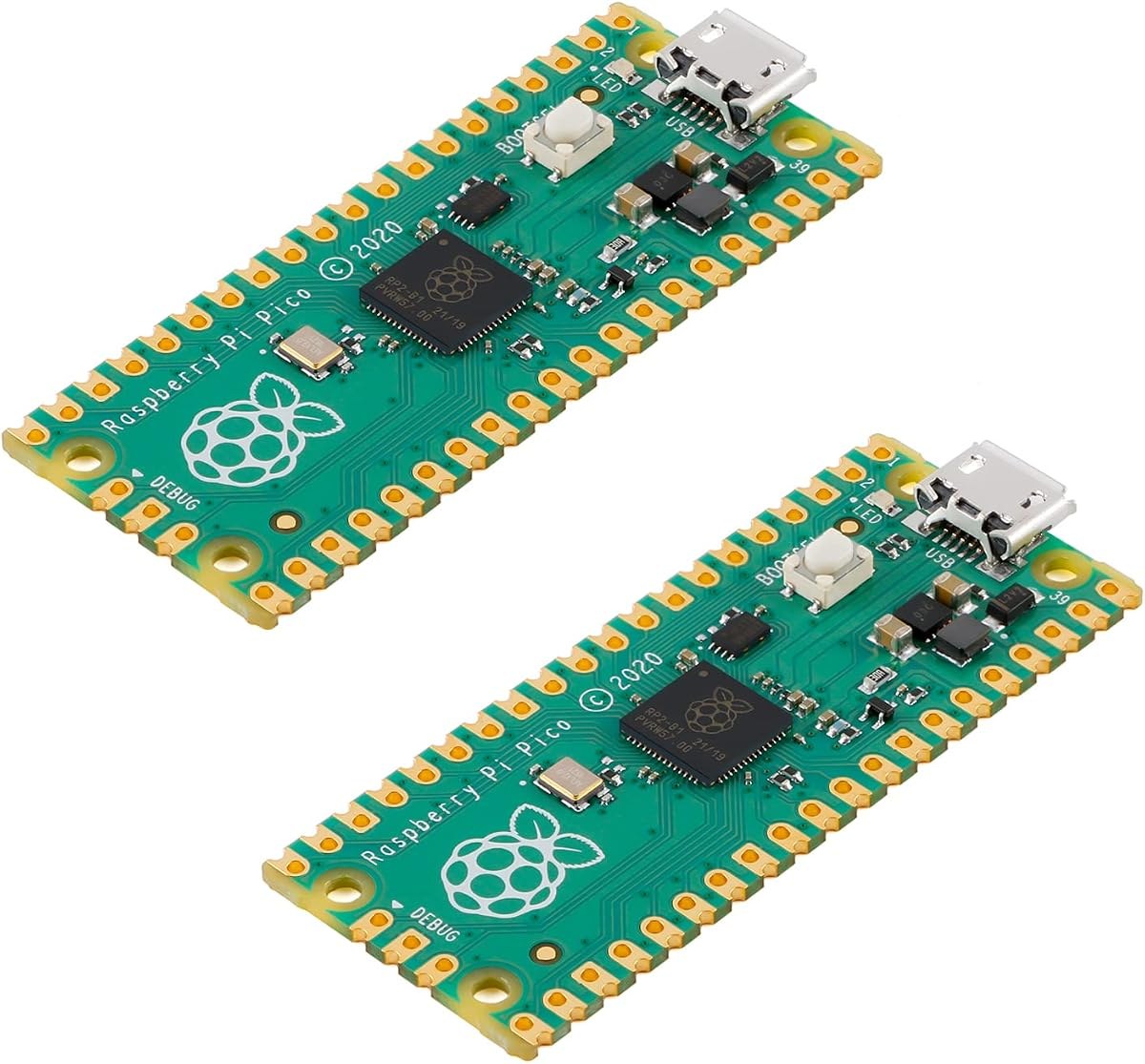
Description
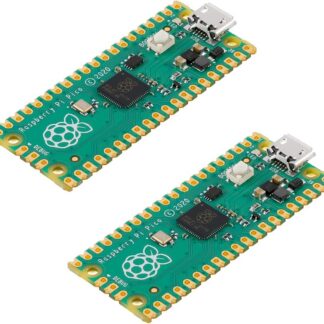
Two beginner-friendly Raspberry Pi Pico microcontroller boards. The RP2040 features a dual-core ARM Cortex M0+ processor with a flexible clock running up to 133 MHz, 264 KB of SRAM, and 2 MB of on-board flash memory, with support for up to 16 MB of off-chip flash through a dedicated QSPI bus.
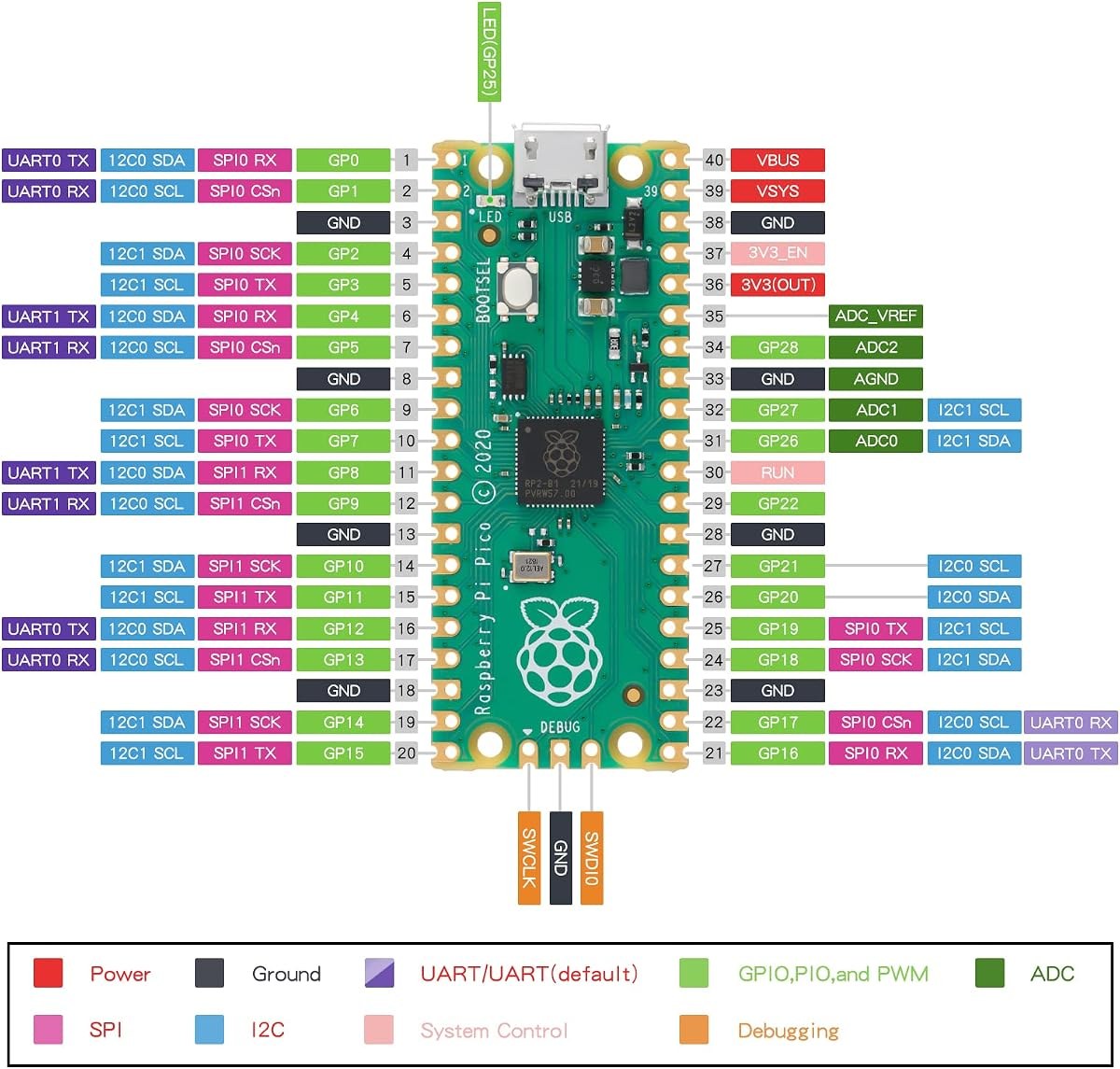
Pico has rich software support with the complete Raspberry Pi official C/C++ SDK and MicroPython SDK. The board has 30 GPIO pins including 26 multi-function GPIO pins and 4 analog signal inputs, 2 x SPI, 2 x I2C, 2 x UART, 3 x 12-bit ADC, and 16 controllable PWM channels, with USB 1.1 host and device support. At 2.1 x 5.1 cm it is as small as a thumb, designed to use either soldered 0.1 in pin headers or as a surface-mountable module.
Specifications
- Quantity: 2 Raspberry Pi Pico boards
- Chip: RP2040, dual-core ARM Cortex M0+, up to 133 MHz
- Memory: 264 KB SRAM, 2 MB on-board flash, up to 16 MB off-chip flash via QSPI
- GPIO: 30 pins, 26 multi-function, 4 analog inputs
- Interfaces: 2 x SPI, 2 x I2C, 2 x UART, 3 x 12-bit ADC, 16 PWM channels, USB 1.1 host and device
- Size: 2.1 x 5.1 cm
- Software: Raspberry Pi C/C++ SDK and MicroPython SDK
In the box
Two Raspberry Pi Pico boards. Pin headers are not included; solder 0.1 in pin headers or use the boards as surface-mountable modules.
How to use it
Hold the BOOTSEL button, plug in USB, and drag the MicroPython UF2 file onto the drive that appears. Then run a blink script in Thonny to light the onboard LED. Two boards let a project and a spare, or two projects, run at once.
Pairs with
Pin headers and a case finish the board. See pin header set 30-piece for Pico and C4Labs Zebra Pico case.
Compare
The pre-soldered single needs no soldering before it plugs into a breadboard. Alternative: Raspberry Pi Pico with pre-soldered header.
Full comparison: Raspberry Pi Pico vs Pico W vs Pico 2.
Shipped fast and securely from our secure facility in New York, providing fast, high quality USA shipping.
Reviews
There are no reviews yet.