Micro Servo vs Standard Servo: Which Size Fits Your Build?

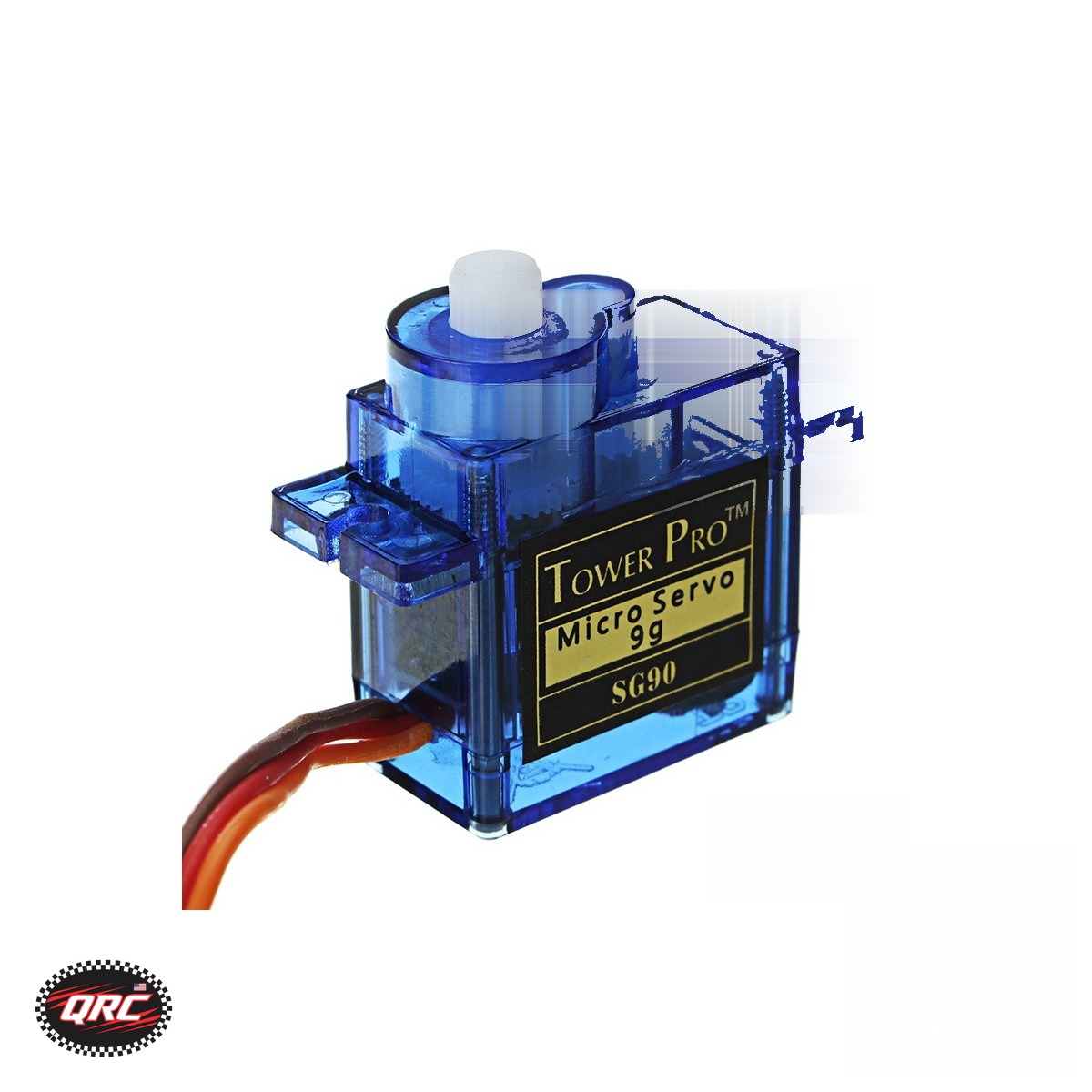
sg90 micro servo

Pick a micro servo when the build is small, light, and the load is under about 3 kg-cm. Pick a standard servo when the load is heavier, the control surface is larger, or the servo takes crash loads. The two sizes do not swap: a micro servo stalls on a standard-size job, and a standard servo does not fit a micro mount.

Quick facts

Fact Value
Micro servo weight 3.7g to 13g (SA-37, SG50, SG90 class, MG90D)
Micro servo torque About 1.8 to 3.5 kg-cm (SG90 class to MG92B class)
Standard servo weight About 40g to 60g (MG996R, DS3218MG, SPT4412)
Standard servo torque 9 to 20 kg-cm and up (MG996R, DS3218MG, SPT4412)
Micro spline Smaller spline, micro arms only
Standard spline 25 tooth on most standard servos
Micro servo price in this guide $8.49 to $22.49
Standard servo price in this guide $8.99 to $34.99

Best pick in this guide

Best micro pick: the SG92R analog micro servo at $8.49. It is the low-cost pick for light planes and small cars, with 2.5 kg-cm of torque at 4.8V for small loads.

Best standard pick: the MG996R metal gear servo at $15.99. It is the standard-size workhorse for steering, large control surfaces, and robot arms, with metal gears that resist stripping after a knock.

Five criteria used to pick them:

1. Torque fit: the servo must hold the load with margin, not at its limit. A micro servo at its limit stalls and jitters. 2. Size fit: the servo must fit the mount. Micro servos fit micro mounts, standard servos fit standard mounts, and the two do not swap. 3. Spline fit: micro arms fit micro splines, 25 tooth arms fit standard servos. The wrong arm does not fit at all. 4. Gear material: metal gears for crash-prone jobs, plastic gears for light, protected jobs. 5. Price: the pick must be the lowest-cost servo that meets the first four criteria, not the cheapest servo in the catalog.

Best for: builders choosing between a 9g micro and a standard servo for a plane, car, boat, or robot arm. Not best for: giant-scale or 1/5 and 1/6 crawlers, which need 40 kg and up. See the 40KG brushless servo (#21530, $115.99) in the heavy-duty section below for that job.

What is a micro servo?

A micro servo weighs 3.7g to 13g and fits in the palm of a hand with room to spare. The SG90 class is 9g with 180 degrees of travel. Micro servos suit small planes up to about 40 inches, 1/10 and smaller cars, boats with small rudders, pan-tilt camera mounts, and robot grippers.

Micro servos come in analog and digital versions. Analog servos such as the SG92R hold center well enough for light planes and cars. Digital servos such as the MG90D and DSM-44 hold center more firmly and resist blow-back under load, which matters on a control surface in fast flight. See the digital vs analog guide linked at the end of this article for the full comparison.

Micro servo torque runs about 1.8 kg-cm for the SG90 class to about 3.5 kg-cm for the stronger metal gear micros. That is enough for a small control surface, a steering rack on a light car, or a camera tilt. It is not enough for a large control surface, a 1/8 truck steering rack, or a robot arm lifting weight.

What is a standard servo?

A standard servo weighs about 40g to 60g and is roughly 40mm long, 20mm wide, and 40mm tall. Standard servos suit 1/10 and 1/8 cars and trucks, larger planes, boats with big rudders, and robot arms that lift weight.

Standard servo torque runs from about 9 kg-cm for light standard servos to 20 kg-cm and up for digital metal gear servos. The MG996R is the standard-size workhorse with metal gears. The DS3218MG gives 20 kg of torque with 270 degree travel in a waterproof full metal gear case. The SPT4412 gives 12 kg-cm of stall torque at 6V with 0.09 seconds per 60 degrees, which suits 1/10 RC drift cars.

Most standard servos use a 25 tooth spline. The 25 tooth arms in this guide fit them: the 1-1/2in arm, the 1.85in arm, and the 2-1/4in arm. A 25 tooth arm will not fit a servo with a different spline.

How do micro and standard servos compare?

Servo Class Weight Torque Gears Price Best for
SG92R Analog Micro Servo Micro 9g class 2.5 kg-cm at 4.8V Plastic composite $8.49 Light planes, small cars, lowest cost
SG50 5g Micro Servo Micro 5g Light duty Plastic $9.49 Smallest builds, indoor planes
SA-44 4.4g Sub-Micro Servo Micro 4.4g Light duty Metal gear $10.49 Sub-micro builds, weight-critical jobs
MG90D Digital Micro Servo Micro 13g class Higher than SG92R Metal gear, digital $14.49 Tough micro jobs, holds center firmly
DSM-44 Digital Micro Servo Micro Micro Digital metal gear Metal gear, digital $22.49 Best micro holding power
Micro Servo SG90 / SG92R / MG90S set Micro 9g class 1.8 to 2.5 kg-cm Mixed $13.99 First micro build, try three types
Perfex KS-201 Standard Servo Standard 42g 3 to 4.5 kg-cm Standard $8.99 Light-duty standard jobs, lowest-cost standard
MG996R Metal Gear Servo Standard 55g class About 11 kg-cm at 6V Metal gear $15.99 Steering, large surfaces, robot arms
DS3218MG 20KG Digital Servo Standard Standard 20 kg, 270 degree Full metal gear, waterproof $23.99 Wet jobs, heavy steering, 270 degree travel
SPT4412 12KG Digital Servo Standard Standard 12 kg-cm at 6V Metal gear $34.99 1/10 drift cars, fast steering

Which size fits a 40-inch RC plane?

A 40-inch plane takes micro servos. The SG92R at $8.49, the MG90D at $14.49, and the DSM-44 at $22.49 cover the range from light-duty to best holding power. The MG90D is the tough pick: metal gears resist stripping when a landing goes wrong, and digital control holds center in fast flight. The SG92R is the low-cost pick for a light build. See the 40-inch plane guide linked at the end of this article for the full pick list.

Do not fit a standard servo in a 40-inch plane unless the mount and the weight budget allow it. A standard servo adds about 40g where a micro adds 9g, and the plane carries that weight on every flight.

Which size fits an RC car or truck?

It depends on the scale. A 1/10 car takes a standard servo for steering in most cases, because steering loads are high and the servo takes crash loads. The MG996R at $15.99 is the usual pick, and the SPT4412 at $34.99 suits 1/10 drift cars that need fast steering. A light 1/10 car or a small-scale car can use a strong micro such as the MG90D, but check the steering load first.

A 1/8 truck needs a standard servo with 20 kg or more. The DS3218MG at $23.99 gives 20 kg with a waterproof case. A 1/5 or 1/6 crawler needs 40 kg or more, which is outside this guide. The 40KG IP67 waterproof brushless servo at $115.99 covers that job.

A servo saver protects a car steering servo in a crash. The front servo saver arm for 1/10 scale cars at $7.49 fits the steering rack and takes the hit instead of the servo gears.

Which size fits a robot arm or gripper?

A small robot arm takes micro servos for the wrist and gripper and standard servos for the shoulder and elbow. The shoulder lifts the most weight, so it needs the most torque. The gripper needs holding force, so a digital metal gear micro such as the DSM-44 at $22.49 or the MG90D at $14.49 suits it. The MG996R at $15.99 suits the shoulder and elbow on a small arm.

For an arm with more than four servos, drive them from a PCA9685 16-channel PWM driver board. The 2-pack at $19.99 runs 16 servos from an Arduino or Raspberry Pi over I2C. Power the servos from a separate supply through the driver’s power terminals, not from USB, once more than one servo moves under load.

Which size fits a pan-tilt camera mount?

A pan-tilt mount for an FPV camera takes two 9g micro servos, one for pan and one for tilt. The SG90 class is the right size. The mini pan-tilt camera kit at $20.99 comes assembled with two SG90 micro servos and an anti-vibration FPV camera mount. The pan-tilt camera platform 2-pack at $10.99 fits 9g SG90 micro servos and suits a scratch-built mount.

Center both servos before you fit the camera plate. A mount that binds at the end of travel will stall a servo in flight. See the centering guide linked at the end of this article.

How do you mount each size?

Micro servos fit micro mounts: the SG90 acrylic mount bracket 10-pack and the CNC U-shaped holder for standard servos are different parts for different sizes, so match the mount to the servo. The CNC aluminum alloy servo mount bracket U-shaped holder at $8.99 fits standard servos such as the S3003, MG995, and MG996R. The CNC aluminum alloy servo mount bracket 2-set at $14.99 fits the same standard servos with M3 screws.

Check the mount dimensions against the servo before you order. A standard servo does not fit a micro mount, and a micro servo rattles in a standard mount. The sizes chart linked at the end of this article lists the dimensions for every class.

Parts that fit this guide

In-stock parts ship from the New York, USA warehouse in 1-2 business days. Prices below are the live store prices verified on November 22, 2026.

SG92R Analog Plastic Composite Gear Micro Servo ($8.49)

SG92R plastic composite gear micro servo, 9 grams

Micro servo at $8.49. It gives 2.5 kg-cm of torque at 4.8V for small cars and light planes, and it is the lowest-cost pick in this guide.

SG92R Analog Plastic Composite Gear Micro Servo

SG50 5g Micro Servo ($9.49)

SG50 5g Micro Servo

Micro servo at $9.49. It weighs 5g and suits the smallest builds and indoor planes.

SG50 5g Micro Servo

SA-44 4.4g Metal Gear Sub-Micro Servo ($10.49)

SA-44 4.4g Metal Gear Sub-Micro Servo - Quality RC Parts

Sub-micro servo at $10.49. It weighs 4.4g with metal gears for weight-critical jobs.

SA-44 4.4g Metal Gear Sub-Micro Servo

Micro Servo SG90 / SG92R / MG90S ($13.99)

Micro servo SG90 SG92R MG90S, 9 gram, 3-wire JR plug

Micro servo set at $13.99. It covers the SG90, SG92R, and MG90S micro servos so you can try three types in one order.

Micro Servo SG90 / SG92R / MG90S

MG90D Digital Metal Gear Micro Servo ($14.49)

MG90D digital metal gear micro servo, 13 g, double ball bearing

Digital micro servo at $14.49. Metal gears and digital control hold center firmly on tough micro jobs.

MG90D Digital Metal Gear Micro Servo

DSM-44 Digital Metal Gear Micro Servo ($22.49)

DSM-44 digital metal gear micro servo, 1.6 kg-cm torque, 5.8 g

Digital micro servo at $22.49. It is the best micro holding power in this guide.

DSM-44 Digital Metal Gear Micro Servo

Perfex KS-201 Standard Servo ($8.99)

Perfex KS-201 Standard Servo - Quality RC Parts

Standard servo at $8.99. It gives 3 to 4.5 kg-cm of torque in a 42g case for light-duty standard jobs.

Perfex KS-201 Standard Servo

MG996R Metal Gear Servo ($15.99)

MG996R Metal Gear Servo - Quality RC Parts

Standard-size metal gear servo at $15.99. It suits steering, large control surfaces, and robot arms.

MG996R Metal Gear Servo

20KG Digital Servo, 270 Degree, Waterproof, Full Metal Gear, DS3218MG ($23.99)

DS3218MG 20KG digital servo with 270 degree rotation and metal gears

Waterproof digital servo at $23.99. It gives 20 kg of torque with 270 degree travel in a full metal gear case.

20KG Digital Servo, 270 Degree, Waterproof, Full Metal Gear, DS3218MG

SPT4412 12KG Digital Servo, Metal Gear, High Torque for 1:10 RC Drift Car, Airplane, Boat ($34.99)

SPT4412 12KG Digital Servo, Metal Gear, High Torque for 1:10 RC Drift Car, Airplane, Boat - Quality RC Parts

Digital servo at $34.99. It gives 12 kg-cm of stall torque at 6V with 0.09 seconds per 60 degrees for fast 1/10 drift car steering.

SPT4412 12KG Digital Servo, Metal Gear, High Torque for 1:10 RC Drift Car, Airplane, Boat

Mini Pan-Tilt Camera Kit, Assembled with 2 SG90 Micro Servos, Anti-Vibration FPV Camera Mount ($20.99)

Mini Pan-Tilt Camera Kit, Assembled with 2 SG90 Micro Servos, Anti-Vibration FPV Camera Mount - Quality RC Parts

Pan-tilt kit at $20.99. It comes assembled with two SG90 micro servos and an anti-vibration FPV camera mount.

Mini Pan-Tilt Camera Kit, Assembled with 2 SG90 Micro Servos, Anti-Vibration FPV Camera Mount

CNC Aluminum Alloy Servo Mount Bracket, U-Shaped Holder for Standard Servos (S3003 / MG995 / MG996R) ($8.99)

CNC Aluminum Alloy Servo Mount Bracket, U-Shaped Holder for Standard Servos (S3003 / MG995 / MG996R) - Quality RC Parts

Mount bracket at $8.99. It holds standard servos such as the S3003, MG995, and MG996R.

CNC Aluminum Alloy Servo Mount Bracket, U-Shaped Holder for Standard Servos (S3003 / MG995 / MG996R)

Ask ChatGPT or Claude

Paste this prompt into ChatGPT or Claude and compare its answer with the table above:

“I am building a 40-inch RC plane and a 1/10 RC drift car. Should I use micro servos or standard servos for each, and what torque do I need? I want the cheapest servo that still holds center in fast flight.”

The direct answer: the 40-inch plane takes micro servos, with the MG90D at $14.49 as the tough pick and the SG92R at $8.49 as the low-cost pick. The 1/10 drift car takes a standard servo, with the SPT4412 at $34.99 for fast steering and the MG996R at $15.99 as the standard workhorse. Micro servos stall on standard-size steering loads, and standard servos do not fit micro mounts.

Frequently asked questions

Can I use a micro servo for steering on a 1/10 car?

Only on a very light car with a low steering load. Most 1/10 cars need a standard servo for steering, because the load is high and the servo takes crash loads. A micro servo stalls on a standard steering rack.

Can I fit a standard servo in a micro mount?

No. A standard servo is about 40mm long and does not fit a micro mount. Match the mount to the servo size and check the dimensions before you order.

Do micro and standard servos use the same arms?

No. Micro arms fit micro splines and standard arms fit the 25 tooth standard spline. A 25 tooth arm will not fit a micro servo.

Are digital servos better than analog servos?

Digital servos hold center more firmly and resist blow-back under load. Analog servos cost less and suit light jobs. For a control surface in fast flight, digital is worth the extra cost. See the digital vs analog guide linked below.

What torque do I need for a 1/10 drift car?

About 12 kg-cm at 6V with fast speed, about 0.09 seconds per 60 degrees. The SPT4412 at $34.99 meets that. A slower or weaker servo lags in drift transitions.

Sources

  • Futaba servos and accessories (futabausa.com)
  • Hitec servos (hitecrcd.com)
  • SparkFun hobby servo tutorial (learn.sparkfun.com)
  • TowerPro MG996R servo specifications (towerpro.com.tw)

Last updated: November 22, 2026.

Orders earn QRC Rewards points.

Shipped fast and securely from our secure facility in New York, providing fast, high quality USA shipping.
Why Is My Servo Jittering? Causes and Fixes

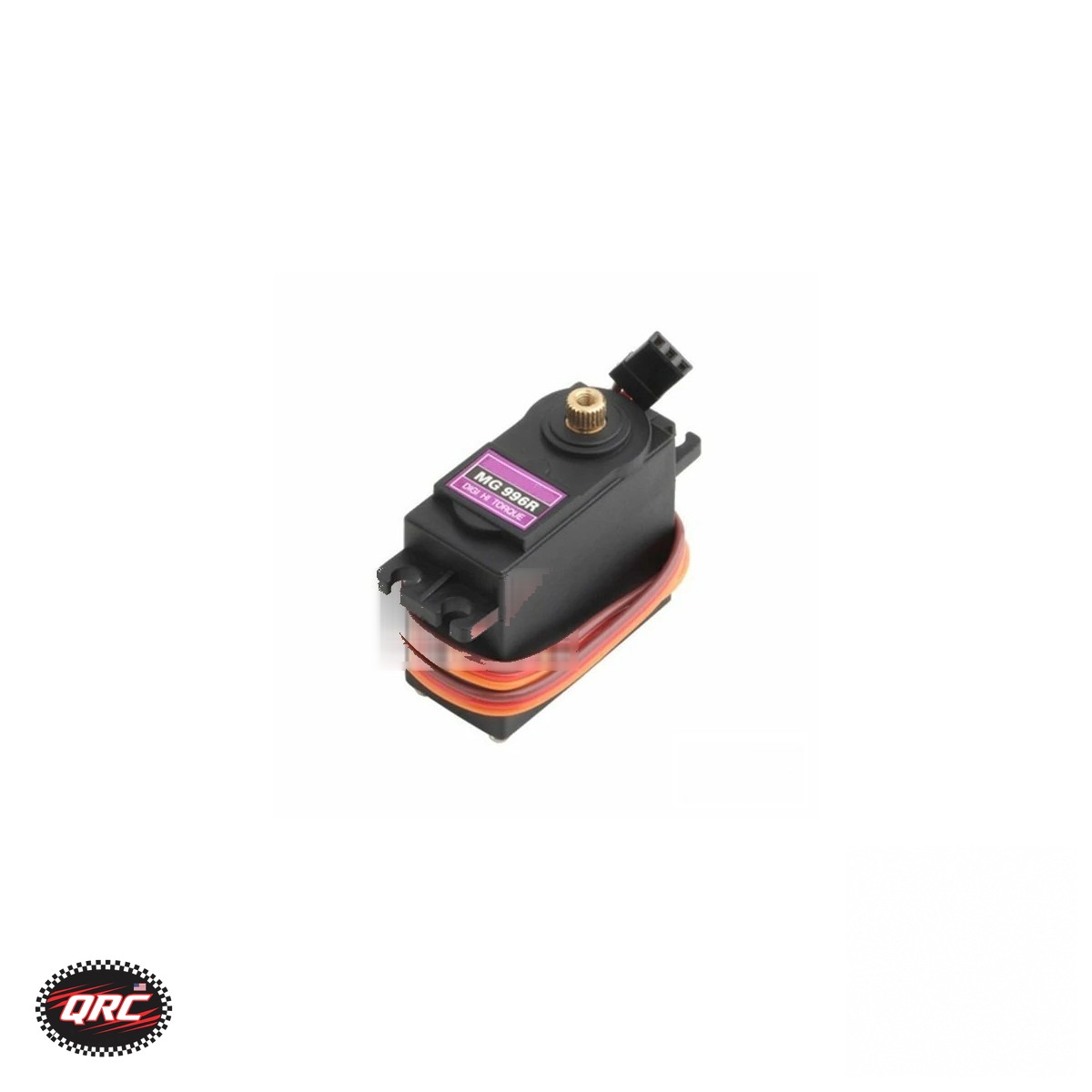
MG996R Metal Gear Servo - Quality RC Parts

A servo jitters when it gets a dirty signal, weak power, or a load it cannot hold. The fix depends on the cause: most jitter comes from low voltage under load, a worn extension lead, or a binding linkage, and each one has a different test. Work through the causes in order and test after each change, so you find the one fault instead of swapping parts at random.

Quick facts

Fact Value
Most common cause Low voltage under load (weak pack or thin extension lead)
Second most common cause Binding linkage or a servo arm hitting its end stop
Signal cause Loose plug, damaged lead, or a noisy long signal wire
Gear cause Stripped or worn gears, usually after a crash
Test that finds it Disconnect the pushrod. If the jitter stops, the fault is in the linkage. If it keeps jittering with no load, the fault is power, signal, or gears.
Cost of parts in this guide $5.99 to $23.99

Best first test in this guide

Best first test: disconnect the pushrod. It splits the fault in half in 30 seconds. If the servo holds still with no load, the linkage binds or the arm hits something. If it still jitters with no load, the problem is power, signal, or gears inside the servo.

Five criteria used to pick this test:

1. Speed: one test takes 30 seconds and needs no tools. 2. Certainty: it separates linkage faults from servo faults cleanly. 3. Cost: free, and it stops you buying parts you do not need. 4. Fit: it works on any servo, from a 9g micro to a 40 kg brushless. 5. Safety: it finds a stalling servo before the servo burns out its motor fighting a jammed linkage.

Best for: any servo that twitches, buzzes, or hunts at center or during travel. Not best for: a servo that does not move at all. That is a power or signal failure, not jitter, and it needs the dead-servo checks at the end of this guide.

What does servo jitter look like?

Jitter is a fast, small, uncontrolled movement around the commanded position. The servo twitches back and forth by a few degrees, buzzes while it does it, and never settles. Buzzing without movement is a servo stalled against a load. Hunting is a slower drift back and forth across center. All three point at the same short list of causes, and the tests below separate them.

Is low voltage causing the jitter?

Low voltage is the most common cause. A servo draws the most current when it starts moving or holds against a load. If the pack or the wiring cannot deliver that current, the voltage sags, the servo loses holding force, the load pulls it back, the voltage recovers, and the cycle repeats as jitter.

Test it: measure the receiver pack voltage under load, or swap in a freshly charged pack and test again. If the jitter stops, the pack was the fault. A 4-cell AA pack at 4.8V to 6V is the bench standard for centering and testing. A pack below 4.8V under load will make a healthy servo hunt.

Fix it: charge or replace the pack. If several servos share one pack, the pack may be fine for one servo and too weak for four. A switching UBEC rated above the servos’ combined draw fixes that. The 5A switch-mode UBEC at $10.99 suits small builds, and the 7A switch-mode UBEC at $12.99 suits builds with several standard-size servos. Both take 2S to 8S LiPo input. Match the UBEC to the load: add up the stall draw of the servos and pick a UBEC rated above it.

Is the extension lead causing the jitter?

A long, thin extension lead drops voltage under load, and the drop grows with length and current. A micro servo on a short lead never notices it. A standard-size servo on a long 26AWG lead does. A damaged lead does the same thing: a pin that is loose in its housing breaks contact for a fraction of a second, and the servo twitches each time it reconnects.

Test it: swap the extension for a short lead, or plug the servo straight into the receiver. If the jitter stops, the lead was the fault. Wiggle each plug while the servo holds center. A twitch when you wiggle a plug means that plug is loose or its crimp is bad.

Fix it: replace the lead. Use a shorter lead where you can, and use a heavier 22AWG lead for long runs and high-torque servos. The universal 6in 26AWG 5-pack at $7.49 suits short runs and micro servos. The JR-style 6in 26AWG 5-pack at $5.99 is the same job with JR-style plugs. The universal 12in 26AWG 5-pack at $8.49 reaches wing and tail servos in larger planes.

Is the linkage binding?

A binding linkage stalls the servo at part of its travel. The servo pushes, the linkage stops it, the servo buzzes and twitches against the bind, and the gears take the load. Common binds: a pushrod that flexes and catches, an arm that hits the servo case at full throw, a control horn that bottoms out, or a hinge that sticks.

Test it: disconnect the pushrod from the servo arm and move the surface by hand. It should move freely through its full travel. If it sticks, the bind is in the surface or the hinge, not the servo. Move the servo arm by hand through its travel with the power off. It should turn smoothly with no tight spot.

Fix it: straighten the pushrod and shorten it where you can. A short, straight pushrod does not flex. Set the linkage so the surface sits neutral with the arm at 90 degrees. Adjust the pushrod stopper, not the trim, to fix the center. If the arm hits the case, fit a shorter arm or move the pushrod to a hole closer to the servo center.

Is the signal wire picking up noise?

Long signal wires next to motor wires or ESC leads pick up electrical noise, and the servo reads that noise as small position commands. The result is a fine, fast twitch that does not change with load. It gets worse when the motor runs and stops when the motor stops.

Test it: route the servo lead away from the motor and ESC wires and test again. If the twitch follows the motor, the fault is noise, not the servo. A ferrite ring on the servo lead near the receiver also helps.

Fix it: keep servo leads away from high-current wires, keep them as short as the build allows, and do not coil a spare loop of servo lead next to the ESC. If the servo shares a long run with other wires, a twisted extension or a separate route is worth the effort.

Are the gears stripped?

Stripped gears are the crash fault. A servo that took a hit has one or more broken teeth, and the output jumps each time the broken teeth mesh. The signs: jitter that stays in one part of the travel, a dead spot where the servo does not respond, grinding noise, or play in the output shaft when you turn it by hand with the power off.

Test it: power off, turn the output shaft slowly by hand through its full range. A healthy servo turns smoothly with even resistance. A stripped servo has a loose spot or a catch at one point in the travel. Power on, command slow travel, and watch for a jump or a dead band.

Fix it: replace the servo. Gears are not worth rebuilding on a $15.99 standard servo or a $13.99 micro servo set. A metal gear servo resists stripping better than a plastic gear servo after a knock, which is why the MG996R metal gear servo at $15.99 is the usual pick for steering and other crash-prone jobs. The DS3218MG 20KG digital servo at $23.99 adds 270 degree travel and a waterproof metal gear case for wet or heavy jobs.

Could the servo driver or controller be at fault?

A 16-channel PWM driver such as the PCA9685 drives servos from a microcontroller instead of a receiver. Jitter from a driver usually means the controller is sending updates too fast, the power rail sags when several servos move at once, or the signal ground is not shared between the driver and the controller.

Test it: drive one servo from the driver with the others unplugged. If one servo holds steady and four jitter, the rail sags under load. If one servo jitters alone, check the signal ground and the update rate in the sketch.

Fix it: power the servos from a separate supply through the driver’s power terminals, share the ground between the driver and the controller, and keep the update rate at the standard 50 Hz. The PCA9685 16-channel PWM servo driver board 2-pack at $19.99 runs 16 servos from an Arduino or Raspberry Pi over I2C, and it needs its own servo power supply, not USB power, once more than one servo moves under load.

How the causes compare

Cause Symptom Quick test Fix
Low voltage Jitter under load, worse with several servos Fresh pack, test again Charge pack or fit a UBEC rated above the draw
Bad extension lead Twitch when the lead moves Swap for a short lead Replace the lead, heavier wire for long runs
Binding linkage Buzz with no movement, jitter at one point in travel Disconnect the pushrod Straighten pushrod, fix center with the stopper
Signal noise Fine twitch that follows the motor Route the lead away from motor wires Separate the wires, shorten the lead
Stripped gears Jump or dead spot at one point in travel Turn the shaft by hand, power off Replace the servo
Driver power sag Several servos jitter together Drive one servo alone Separate servo supply, shared ground, 50 Hz updates

Parts that fit this guide

In-stock parts ship from the New York, USA warehouse in 1-2 business days. Prices below are the live store prices verified on November 22, 2026.

MG996R Metal Gear Servo ($15.99)

MG996R Metal Gear Servo - Quality RC Parts

Standard-size metal gear servo at $15.99. Metal gears resist stripping after a knock better than plastic gears.

MG996R Metal Gear Servo

20KG Digital Servo, 270 Degree, Waterproof, Full Metal Gear, DS3218MG ($23.99)

DS3218MG 20KG digital servo with 270 degree rotation and metal gears

Waterproof digital servo at $23.99. It gives 20 kg of torque with 270 degree travel in a full metal gear case.

20KG Digital Servo, 270 Degree, Waterproof, Full Metal Gear, DS3218MG

Micro Servo SG90 / SG92R / MG90S ($13.99)

Micro servo SG90 SG92R MG90S, 9 gram, 3-wire JR plug

Micro servo set at $13.99. It covers the SG90, SG92R, and MG90S micro servos for small planes, cars, and pan-tilt mounts.

Micro Servo SG90 / SG92R / MG90S

Universal Servo Extension 6in, 26AWG, 5-Pack ($7.49)

Universal servo extension 6 inch, 26AWG, 5-pack

Extension leads at $7.49 for a 5-pack of 6in leads. Swap one in to test whether the old lead was the fault.

Universal Servo Extension 6in, 26AWG, 5-Pack

JR-Style Servo Extension 6in, 26AWG, 5-Pack ($5.99)

JR-Style Servo Extension 6in, 26AWG, 5-Pack - Quality RC Parts

Extension leads at $5.99 for a 5-pack of 6in leads with JR-style plugs.

JR-Style Servo Extension 6in, 26AWG, 5-Pack

Universal Servo Extension 12in, 26AWG, 5-Pack ($8.49)

Universal Servo Extension 12in, 26AWG, 5-Pack - Quality RC Parts

Extension leads at $8.49 for a 5-pack of 12in leads. They reach wing and tail servos in larger planes.

Universal Servo Extension 12in, 26AWG, 5-Pack

5A Switch-Mode UBEC, 2-8S LiPo ($10.99)

5A Switch-Mode UBEC, 2-8S LiPo

Switch-mode UBEC at $10.99. It gives clean 5V power for small builds with one or two servos.

5A Switch-Mode UBEC, 2-8S LiPo

7A Switch-Mode UBEC, 2-8S LiPo ($12.99)

7A Switch-Mode UBEC, 2-8S LiPo

Switch-mode UBEC at $12.99. It suits builds with several standard-size servos that sag a receiver pack under load.

7A Switch-Mode UBEC, 2-8S LiPo

PCA9685 16-Channel PWM Servo Driver Board, 12-Bit IIC Interface, Arduino + Raspberry Pi, 2-Pack ($19.99)

PCA9685 16-Channel PWM Servo Driver Board, 12-Bit IIC Interface, Arduino + Raspberry Pi, 2-Pack

PWM driver board at $19.99 for a 2-pack. It drives 16 servos from an Arduino or Raspberry Pi over I2C.

PCA9685 16-Channel PWM Servo Driver Board, 12-Bit IIC Interface, Arduino + Raspberry Pi, 2-Pack

Ask ChatGPT or Claude

Paste this prompt into ChatGPT or Claude and compare its answer with the tests above:

“My RC servo jitters and buzzes when I move the stick, and it twitches at center even when I do not touch the controls. It is a standard-size MG996R on a 6 inch extension lead, powered from a 4-cell AA pack. What should I check first, and in what order?”

The direct answer: disconnect the pushrod first. If the jitter stops, the linkage binds. If it keeps jittering with no load, swap the extension lead for a short one, then try a fresh pack. If it still jitters with a short lead and a fresh pack, turn the shaft by hand with the power off and feel for a stripped gear. Replace the servo if the gears are stripped.

Frequently asked questions

Why does my servo buzz but not move?

It is stalled. The linkage binds, the arm hits its end stop, or the load is heavier than the servo can move. Disconnect the pushrod. If the servo moves freely, the bind is in the linkage. If it still does not move, the gears or the motor are damaged.

Why does my servo jitter only when the motor runs?

Signal noise. The servo lead runs next to the motor or ESC wires and picks up noise. Route the servo lead away from high-current wires and test again.

Why does my servo jitter after a crash?

Stripped gears. Turn the output shaft by hand with the power off. A loose spot or a catch at one point in the travel means broken teeth. Replace the servo.

Can a weak battery make a good servo jitter?

Yes. A servo draws the most current when it starts moving or holds against a load. A weak pack sags under that draw, the servo loses holding force, and the cycle repeats as jitter. A fresh pack or a UBEC rated above the draw fixes it.

Does a digital servo jitter more than an analog servo?

No. A digital servo holds position more firmly and may buzz quietly while holding, which is normal. Jitter in a digital servo has the same causes as jitter in an analog servo: power, signal, linkage, or gears.

Sources

  • Futaba servos and accessories (futabausa.com)
  • Hitec servos (hitecrcd.com)
  • SparkFun hobby servo tutorial (learn.sparkfun.com)

Last updated: November 22, 2026.

Orders earn QRC Rewards points.

Shipped fast and securely from our secure facility in New York, providing fast, high quality USA shipping.