
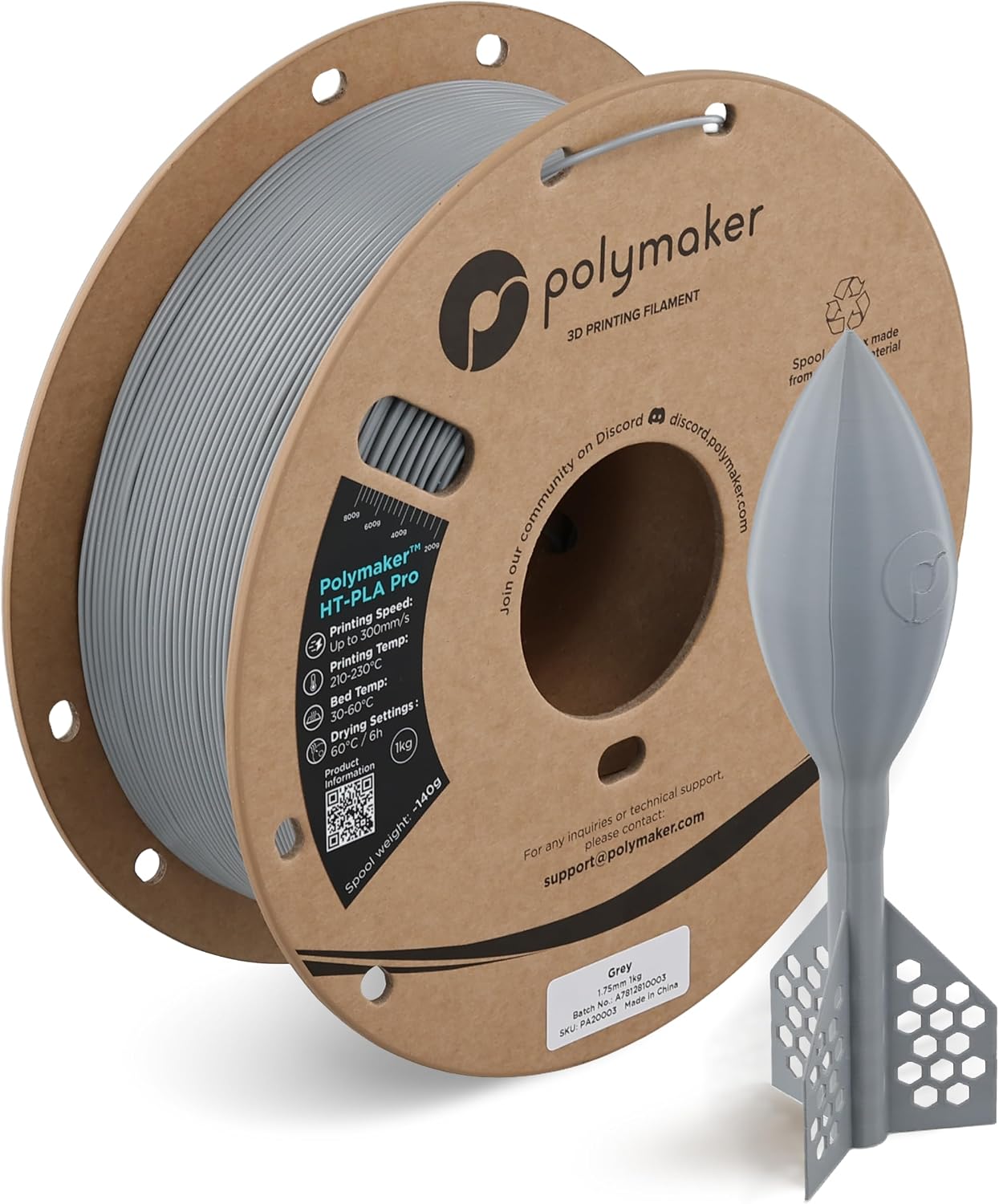
Filament absorbs moisture from the air, and damp filament prints badly. Layers do not stick, surfaces come out rough, strings appear everywhere, and parts come out weak. The fix is not better settings, it is dry filament. Learning how to store filament properly is the cheapest upgrade a 3D printer owner can make, because it fixes problems that look like printer problems but are really storage problems. This guide covers how to store filament day to day, how to tell when it has gone damp, and how to dry it.
The signs of damp filament are easy to spot once you know them. The printer pops and crackles as it extrudes, which is water boiling out of the filament. Prints string more than usual, surfaces look rough and bubbly, and layer adhesion gets worse. Parts that printed fine a month ago start failing for no clear reason. If a spool has been sitting out on the printer for weeks, damp filament is the first thing to check, not the printer settings.
How to Store Filament Day to Day
Keep filament sealed when you are not printing. A sealed bag with desiccant is the minimum, and a dry box is better. Put the spool back in the bag after every print session, and do not leave it sitting on the printer for days between prints. Store the bags in a cool, dry place, away from windows and damp basements. Label each bag with the material and the date you opened it, so you know which spools are oldest and which ones need drying first.
Desiccant is cheap and it works. A few silica gel packs in each bag keep the air inside dry, and they change color when they are used up, so you know when to replace or recharge them. Recharge silica gel by heating it in an oven until the color comes back. A dry box with a seal and a humidity gauge is the next step up, and it is worth it if you own more than a few spools. The goal is simple: filament should only touch open air while it is printing.
Drying Filament That Got Damp
Damp filament can be saved by drying it. Polymaker HT-PLA Pro dries at 60C for 6 hours if it has absorbed moisture, and that is the spec to follow for that filament. Dry it in a filament dryer or a low oven that holds a steady temperature, and let it cool sealed before you print. A spool that pops and strings before drying should print clean after it. If a spool still prints badly after drying, it may be too far gone, and it is time to replace it.
Dry filament before a big print, not after a failed one. If a spool has been sitting out, dry it first and save the filament and the time. The same rule applies to refills. A refill coil is the same filament as a full spool, and it goes damp the same way. Keep the coil tight and sealed, store it on its spool in a bag, and dry it before printing if it has been out. The Anycubic PLA filament refill and the Anycubic PLA+ filament refill both need the same care as any spool.
Filament Storage for Drone and RC Builders
Drone and RC builders usually own several materials at once, and each one needs the same dry storage. Keep PLA+ for mounts and brackets, PETG for guards and flexing parts, and HT-PLA Pro for hot parts, each in its own sealed bag with desiccant. Write the material and color on the bag, so you grab the right spool without opening three bags. A little organization here saves a lot of failed prints later, and it keeps the bench clear.
-
Polymaker HT-PLA Pro Filament, 1.75mm, 1KG
$29.99Select options This product has multiple variants. The options may be chosen on the product pageColor
The rule is short: seal it, dry it, label it. Filament that stays dry prints clean, sticks well, and makes strong parts. Filament that sits out goes damp, prints rough, and wastes your time. A few sealed bags and some desiccant cost less than one failed print, and they pay for themselves the first time a spool prints clean after a month on the shelf. Check the 3D printer filament range for the materials you print most, and store them right from the day they arrive.
Ships from our secure NY warehouse in the USA
Quality RC Parts is a USA shop, and every order ships from our secure NY warehouse. Orders leave in 1 to 2 business days with tracking sent by email, and shipping is free on orders over $100. No overseas wait, no customs. We are a working repair shop, and we stand behind every part we sell.